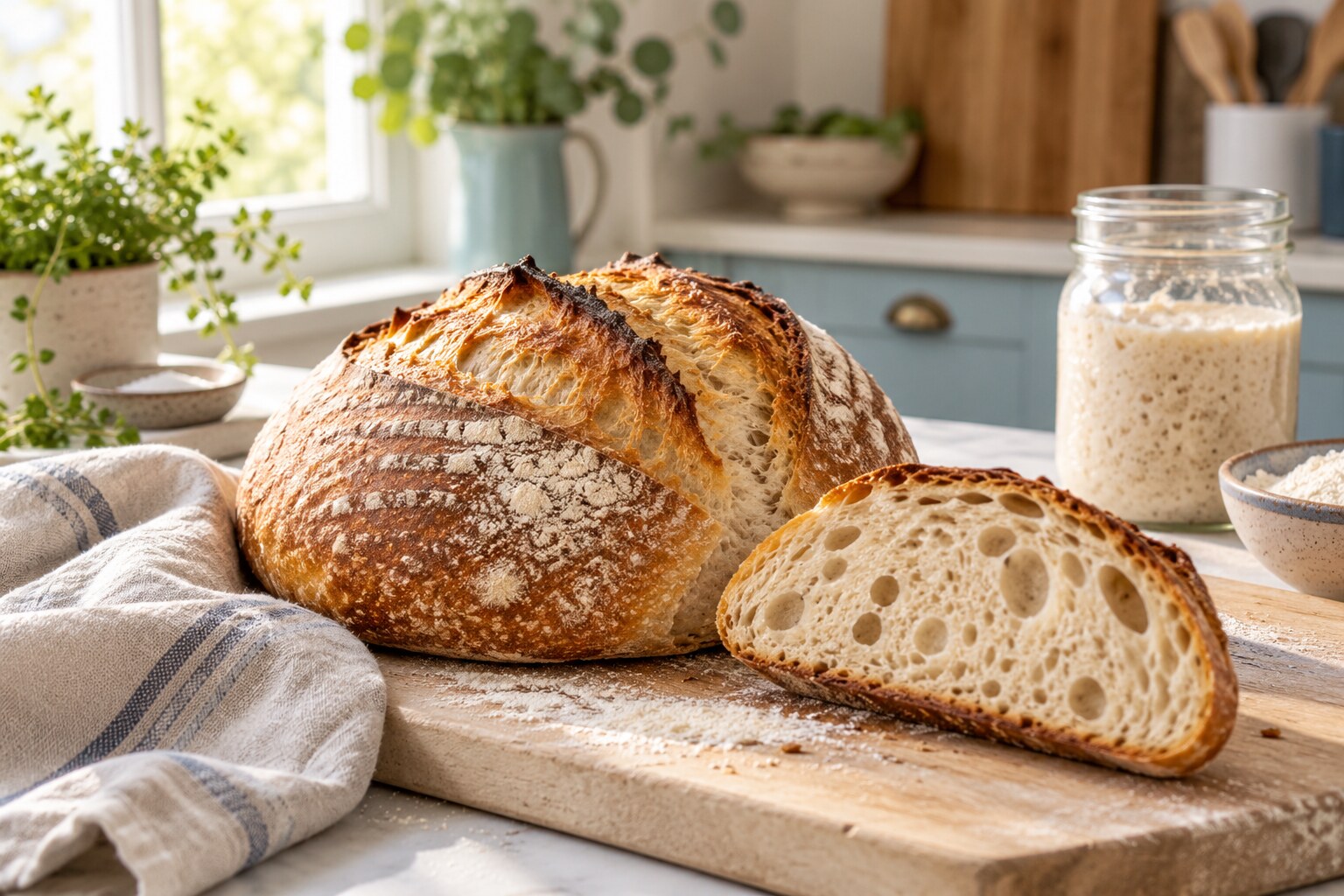
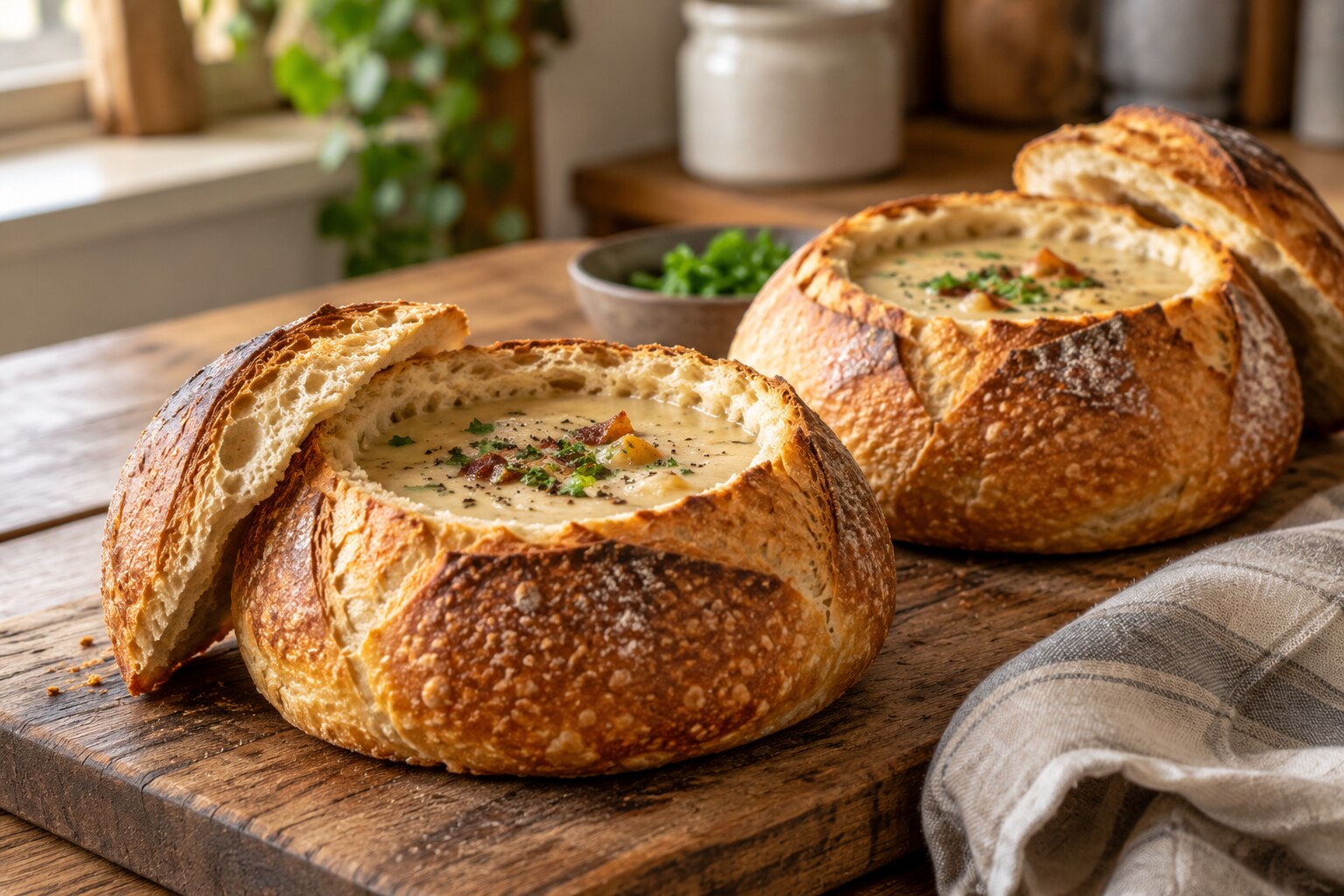
Make four small sourdough boules with an active starter, ferment until the dough is lighter and aerated, bake until deeply golden, then cool and hollow each loaf while leaving a thick wall for the soup.
Why sourdough makes good soup bread bowls
A well-fermented sourdough loaf has a sturdy crust and a flexible crumb, which makes it useful for holding soup without turning immediately soggy. The key is to bake the small loaves fully, let them cool, and leave enough bread around the base and sides when you hollow them.
Ingredients and simple tools
- 500 g bread flour and 350 g room-temperature water.
- 100 g active sourdough starter that rises predictably after feeding.
- 10 g fine sea salt.
- A digital scale, mixing bowl, dough scraper, baking paper, and clean tea towel.
- A Dutch oven or baking stone with a way to create steam.
- A serrated knife and spoon for shaping the cooled loaves into bowls.
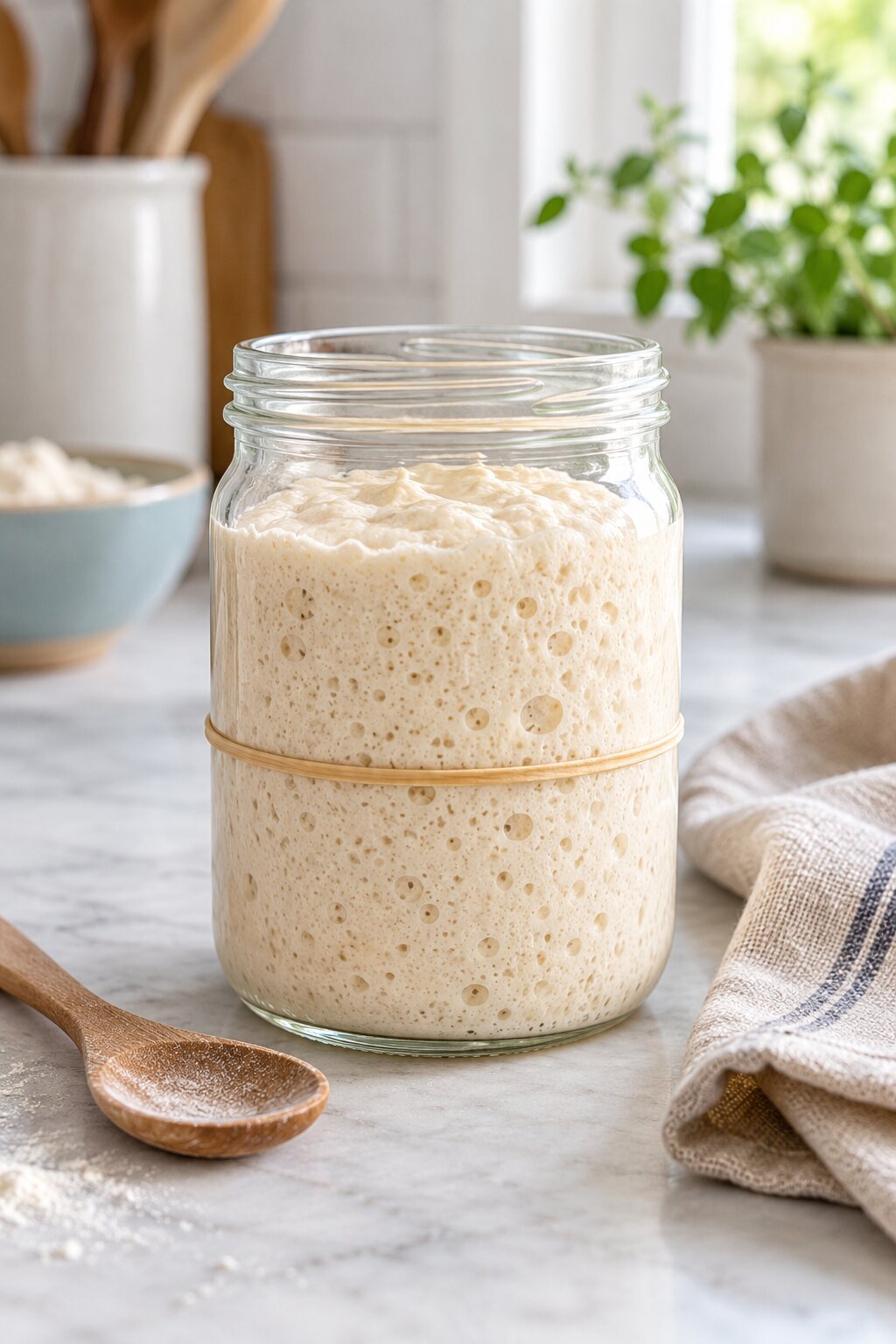
Start with an active starter
Your starter should be bubbly, risen, and close to its usual peak before you mix the dough. If it is still unpredictable, give it a few more feedings and track its rise in a straight-sided jar. Once your starter is rising predictably, the next step is learning exactly when to mix, ferment, shape, proof, and bake. The Original Sourdough Bread Recipe walks you through the full process step by step. Get the Beginner Sourdough Guide →.
Step-by-step method
1. Mix the flour and water
Add the bread flour and water to a bowl and mix until no dry flour remains. Cover and rest for 30 minutes. This short rest hydrates the flour and makes the dough easier to strengthen without heavy kneading.
2. Add the starter and salt
Add the active starter and salt. Pinch and fold the dough until both are evenly distributed. It may feel sticky at first, but it should become more cohesive as you mix and the flour absorbs the water.
3. Build strength with gentle folds
During the first two hours, complete three or four sets of stretch-and-folds about 30 minutes apart. Lift one side of the dough, stretch it gently, and fold it over the centre. Turn the bowl and repeat around the dough. Stop when it feels smoother and holds its shape for longer.
4. Bulk ferment until the dough is ready
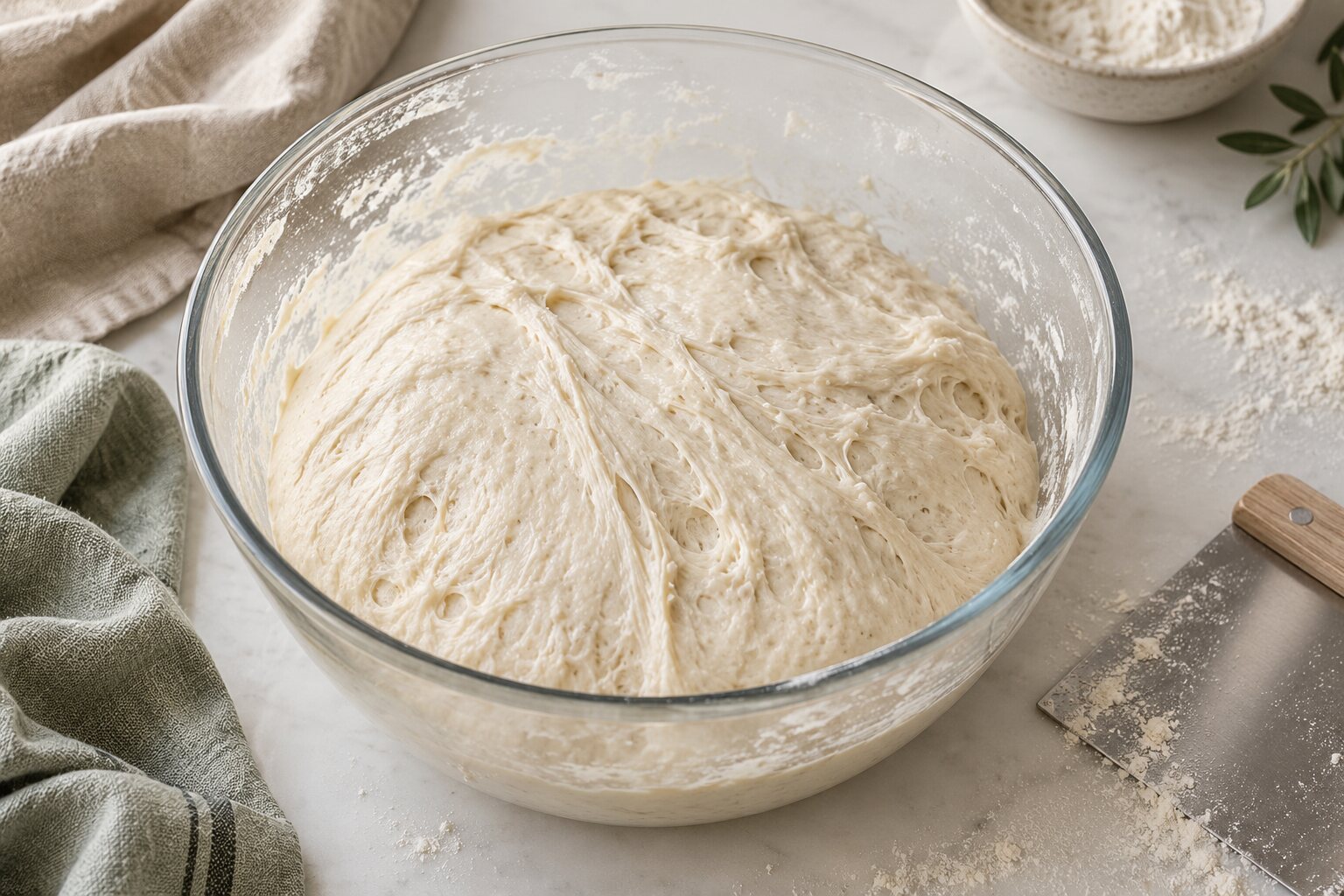
Cover the bowl and leave the dough at room temperature until it looks lighter, smoother, and visibly expanded. A rise of roughly 30–50% is enough for this dough. Look for bubbles around the edge and a gentle wobble instead of waiting for the dough to double.
| Stage | What to look for |
|---|---|
| Early bulk | The dough is heavy, sticky, and spreads quickly after each fold. |
| Developing | The dough feels stronger and begins to hold a rounded shape. |
| Ready to divide | The dough is lighter, aerated, gently jiggly, and moderately expanded. |
5. Divide and shape four small boules
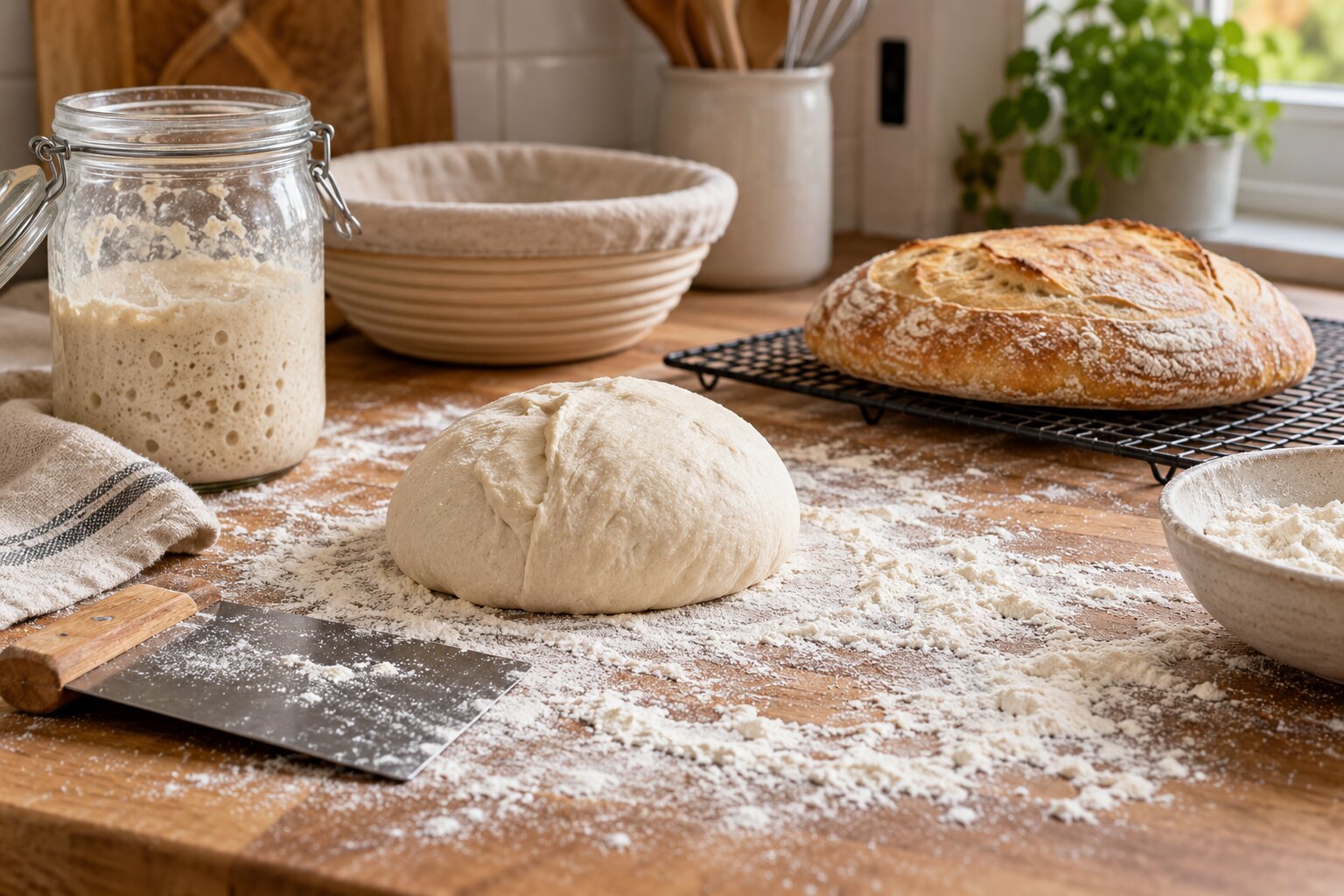
Turn the dough onto a lightly floured counter and divide it into four pieces of roughly equal weight. Pre-shape each piece into a loose round, cover, and rest for 20–30 minutes. Then tighten each round by folding the edges toward the centre and creating gentle surface tension on the outside.
6. Proof the shaped bowls
Place the rounds seam-side down on parchment or seam-side up in lightly floured bowls. Cover and proof at room temperature until puffy and slightly springy. This may take one to three hours, depending on your starter and kitchen temperature. You can also refrigerate them overnight for a slower, more convenient bake.
7. Bake until the crust is sturdy
Preheat the oven and Dutch oven or baking surface to 230°C. If using a Dutch oven, bake the bowls in batches with the lid on for about 20 minutes, then remove the lid and continue baking at 220°C until the crust is deeply golden and firm. If using a baking sheet, add steam for the first 15–20 minutes, then finish the bake until the bowls feel light and sound hollow when tapped.
How to turn the baked loaves into soup bowls
- 01Cool the loaves completely before cutting them. Warm bread is more likely to tear and compress.
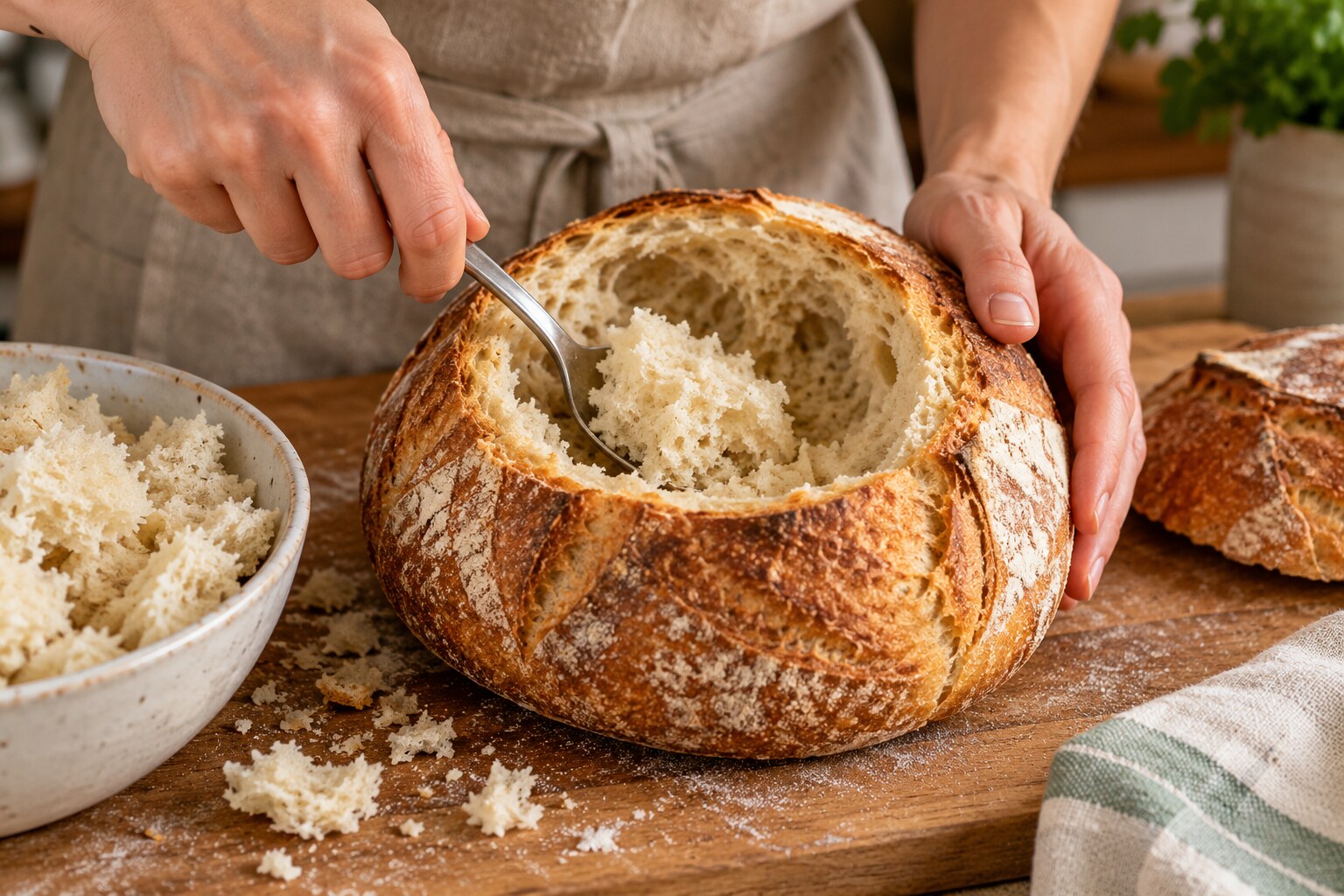
- 02Use a serrated knife to cut a lid about 1–2 cm below the top crust. Keep the lid for dipping or serving.
- 03Scoop out the soft centre with a spoon, leaving about 2 cm of bread around the sides and a thick base.
- 04Brush the inside lightly with olive oil if you want extra protection, then return the bowls to a 200°C oven for 8–10 minutes to dry and crisp the inner crumb.
- 05Fill with hot but not aggressively boiling soup just before serving. Place each bowl on a plate or tray in case a little soup escapes.
Best soups for sourdough bread bowls
Choose a soup that is thick enough to sit inside the bowl rather than a very thin broth. Creamy tomato, potato leek, roasted pumpkin, mushroom, broccoli cheddar, and seafood chowder all pair well with a tangy sourdough crust.
- Creamy tomato soup for a bright, comforting pairing.
- Potato leek or cauliflower soup for a thick, gentle filling.
- Mushroom soup for an earthy flavour that works with sourdough tang.
- Pumpkin or squash soup for a naturally thick autumn-style bowl.
- Chowder when you want a richer meal, as long as the bread bowl is fully cooled and sturdy.
Common problems and fixes
Make-ahead and storage
Bake the bread bowls up to one day ahead and keep them at room temperature once completely cool. Hollow and crisp them shortly before serving for the best texture. If you have leftovers, store the bread separately from the soup so the crust does not soften overnight. The hollowed crumb can be frozen for breadcrumbs, croutons, or a savoury topping.
Sourdough soup bread bowl FAQ
Can I use a young sourdough starter?
It is better to wait until the starter rises predictably after feeding. A weak starter may still ferment the dough, but the small loaves can be dense and less sturdy. Read When Is Sourdough Starter Ready to Bake With? if you are unsure.
Can I make the bread bowls without a Dutch oven?
Yes. Bake them on a preheated tray or stone and add steam during the first part of the bake. Remove the steam source carefully before finishing the loaves until the crust is firm and deeply coloured.
How do I stop the soup from leaking?
Bake the loaves fully, cool them before hollowing, leave a thick base, crisp the inside briefly, and add the soup immediately before eating. A thick soup will usually stay in the bowl longer than a thin broth.
Once you are comfortable reading starter and dough cues, The Original Sourdough Bread Recipe gives you a clear beginner process for mixing, fermentation, shaping, proofing, baking, and troubleshooting.
Sourdough Soup Bread Bowls
Ingredients
- 500 g bread flour
- 350 g room-temperature water
- 100 g active sourdough starter
- 10 g fine sea salt
- A little olive oil for crisping the inside, optional
- Thick soup for serving, such as tomato, potato leek, mushroom, or chowder
Instructions
- 01Mix the flour and water until no dry flour remains. Rest for 30 minutes.
- 02Add the active starter and salt, then mix until the dough becomes cohesive.
- 03Complete three or four gentle stretch-and-folds during the first two hours.
- 04Bulk ferment until the dough is lighter, aerated, and about 30–50% larger.
- 05Divide into four pieces, pre-shape, rest, then shape each piece into a tight round.
- 06Proof until puffy, then bake with steam until the crust is deeply golden and firm.
- 07Cool fully, cut a lid from each loaf, hollow the centre while leaving a thick wall, and crisp the inside briefly before filling with hot soup.