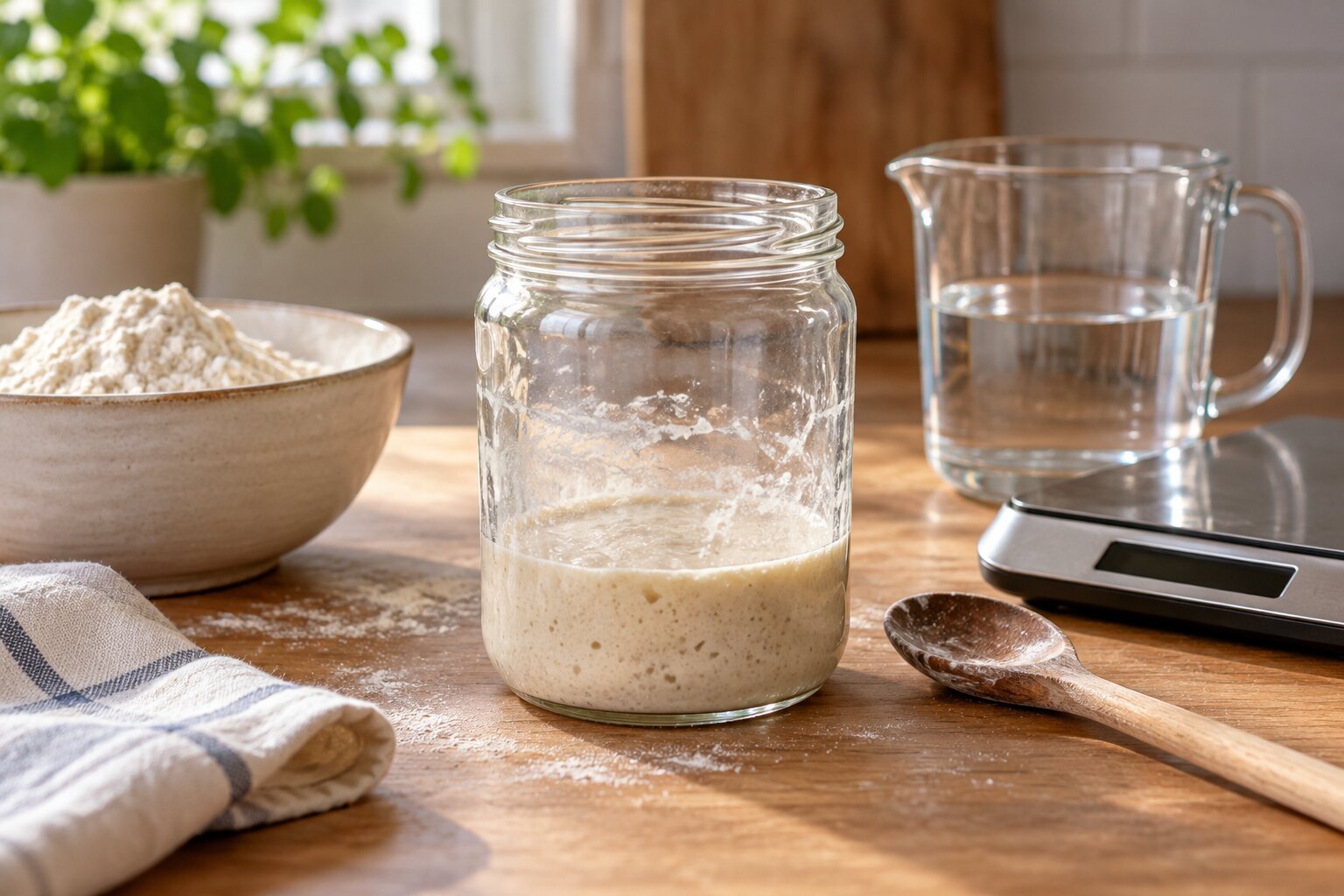
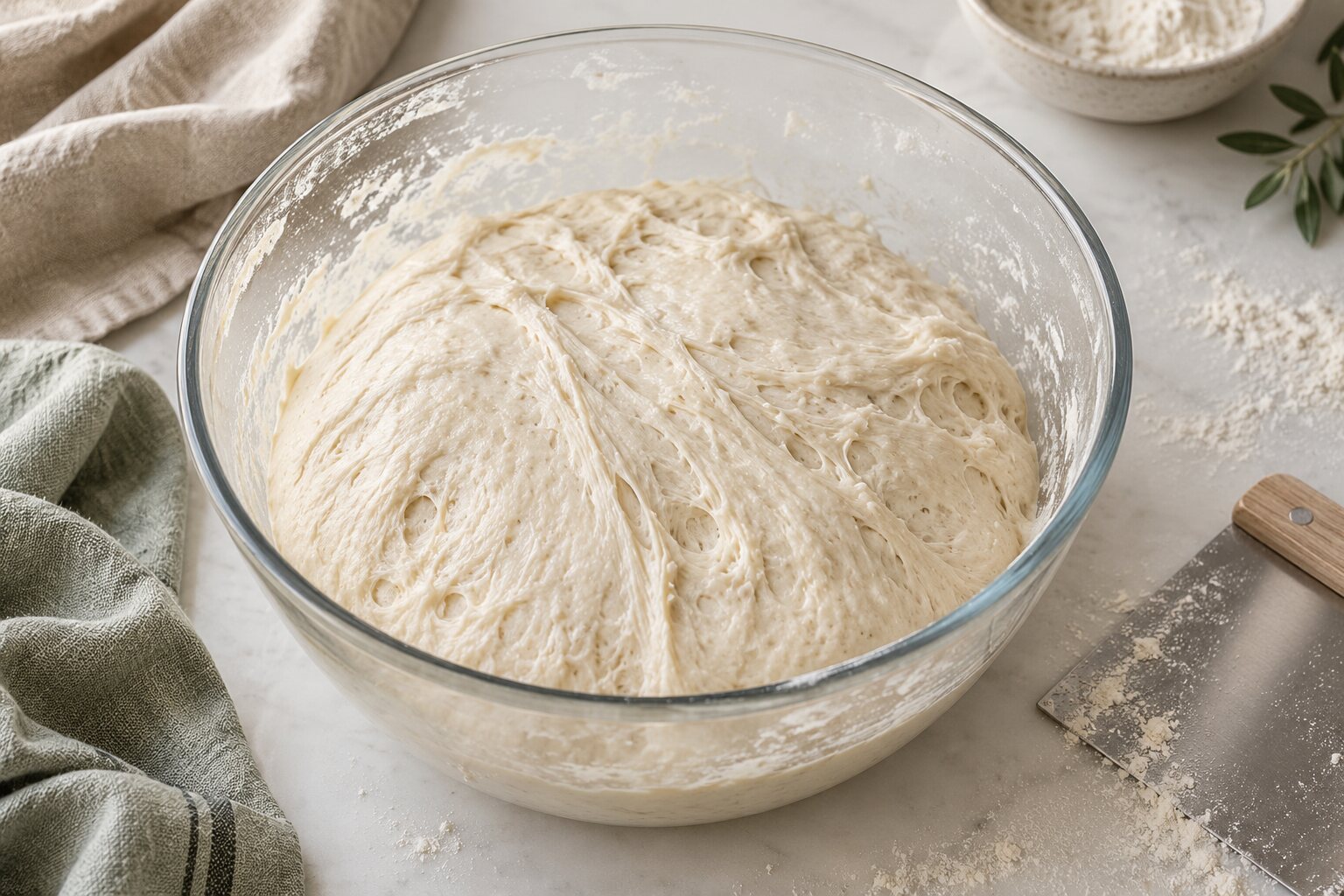
Hydration is the weight of water compared with flour. A 70% hydration dough uses 700 g water for every 1,000 g flour. Higher hydration usually means a wetter, more open dough.
What hydration means
Sourdough hydration is the percentage of water compared with flour by weight. If a dough contains 500 g flour and 350 g water, it has 70% hydration. The calculation is water divided by flour, multiplied by 100.
The basic formula
Hydration = water weight ÷ flour weight × 100. For example, 350 ÷ 500 × 100 = 70%. Use a digital scale because cups and spoons make hydration difficult to repeat.
How common percentages feel
Why flour changes the answer
Two doughs with the same hydration percentage can feel different. Strong bread flour may absorb more water than a softer flour. Whole-wheat and rye flour also absorb water differently and can make the dough feel thick or sticky. Start with a proven recipe for your flour, then adjust gradually.
How to adjust hydration safely
If your dough feels difficult, do not immediately add a large amount of flour. Instead, hold back 10–20 g water during mixing and add it only if the dough can absorb it. This is called bassinage. It gives you control without changing the flour-to-starter balance too much.
Hydration and fermentation
Wetter dough can ferment faster and become harder to read because it spreads. Drier dough may take longer to expand but can hold shape well. This is why bulk fermentation and proofing should be judged visually. Learn the cues in our guide to knowing when bulk fermentation is finished.
For a dependable first bake, the beginner sourdough bread recipe uses a clear ingredient ratio and step-by-step method so you can focus on learning the dough rather than inventing the formula.
A 70% hydration example
A simple dough might use 500 g flour, 350 g water, 100 g active starter, and 10 g salt. The starter contains flour and water too, so professional bakers may calculate “total hydration” differently. For beginner recipe reading, follow the stated formula first and keep your measurements consistent.
Signs your hydration is not working for you
- The dough spreads immediately after shaping.
- You cannot build any surface tension even after folds.
- The crumb is gummy because fermentation is also incomplete.
- You keep adding flour and change the recipe each time.
- You are using a flour that cannot absorb the amount of water in the formula.