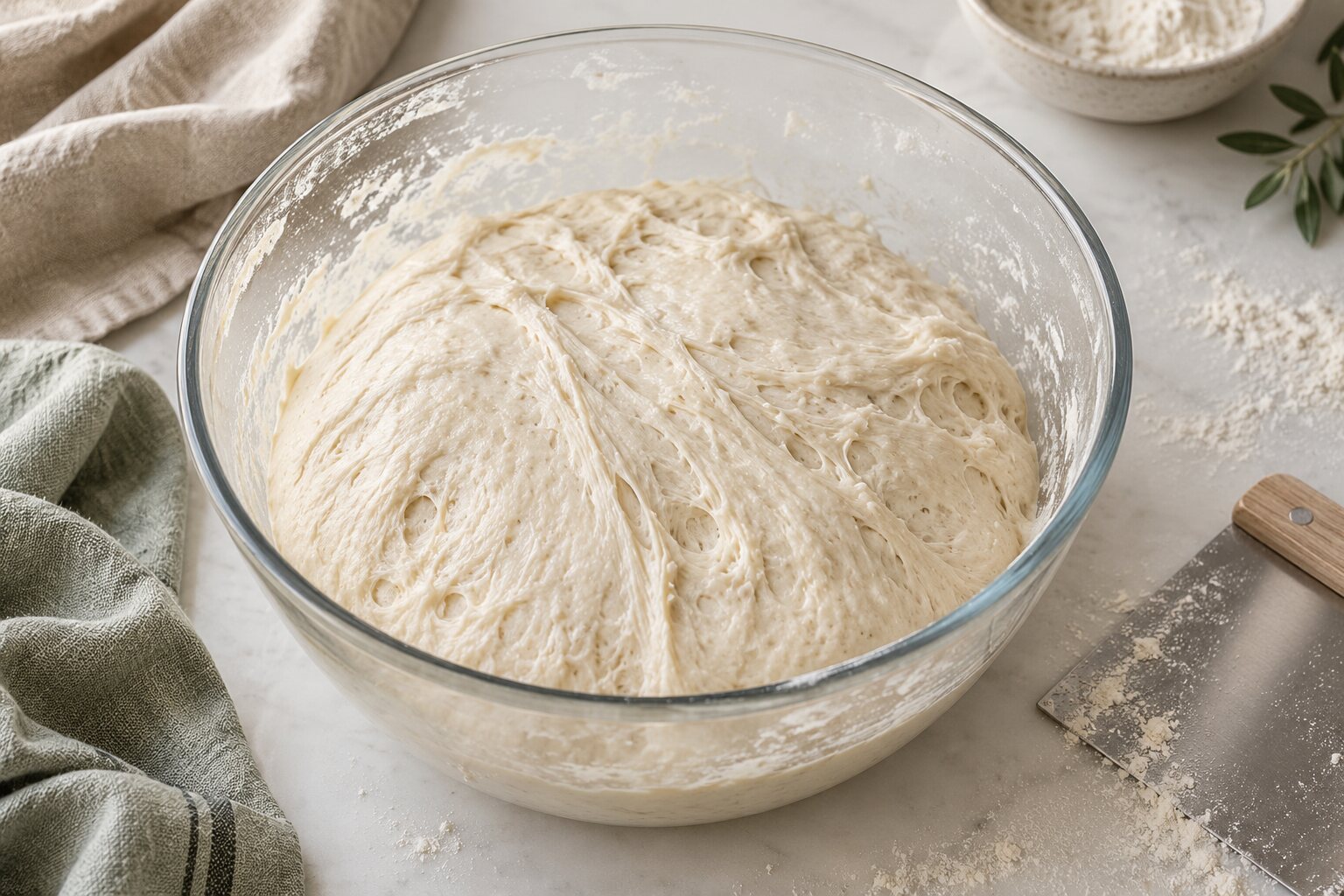
Bulk fermentation is usually done when the dough has risen by roughly 30–75%, looks aerated at the edges, feels elastic and jiggly, and holds some shape when the bowl moves.
Why the clock is not enough
Bulk fermentation is the first major rise after mixing the dough. It depends on starter strength, dough temperature, flour, hydration, and room temperature, so a fixed four-hour rule can mislead you. The dough itself gives you better information than the timer.
Five signs bulk fermentation is ready
1. The dough has expanded
Many doughs are ready after rising around 30–75%, not necessarily doubling. A high-hydration dough may need a smaller rise because it can over-ferment quickly. A stiff dough may show a larger increase before shaping.
2. Bubbles are visible at the edges
Use a clear or straight-sided bowl when possible. Small bubbles along the wall, especially near the bottom, show that fermentation is happening inside the dough rather than only on the surface.
3. The surface is smoother and slightly domed
After folds, the dough may look tight and rough. As fermentation progresses, it becomes smoother, more inflated, and gently rounded. If the surface is completely flat and the dough feels dense, it may need more time.
4. It jiggles when the bowl moves
A ready dough has a soft wobble. It should feel alive but not liquid. If moving the bowl makes the dough slosh and lose all shape, it may have gone too far.
5. It feels elastic, not endlessly sticky
A fermented dough stretches with some resistance and can hold a fold for a moment. Very sticky, weak dough that tears easily can be under-strengthened, over-hydrated, or over-fermented.
Temperature and timing example
If you mix dough at 21°C with an active starter and 70% hydration, bulk may take about five to eight hours. At 26°C, it may finish sooner; at 18°C, it may need much longer. These are starting ranges, not promises.
Try this method: note the dough temperature after mixing, mark its height, and check every 45–60 minutes after the first folds. You will quickly learn how your dough behaves in your own kitchen.
How folds fit into bulk fermentation
Stretch-and-folds or coil folds build strength early in bulk. The first two or three folds are often spaced 20–30 minutes apart. After that, leave the dough undisturbed so it can inflate. Repeatedly handling a nearly ready dough can knock out gas and make shaping harder.
If you want a full beginner sequence from starter to shaped loaf, the complete sourdough bread recipe guide is a useful next step after learning these visual cues.
Under-fermented vs. over-fermented
A simple final check
Tilt the bowl slightly. If the dough releases as one aerated mass and still has structure, it is probably ready. If it clings like paste or tears immediately, pause and reassess hydration, gluten development, and fermentation time rather than relying on a single test.