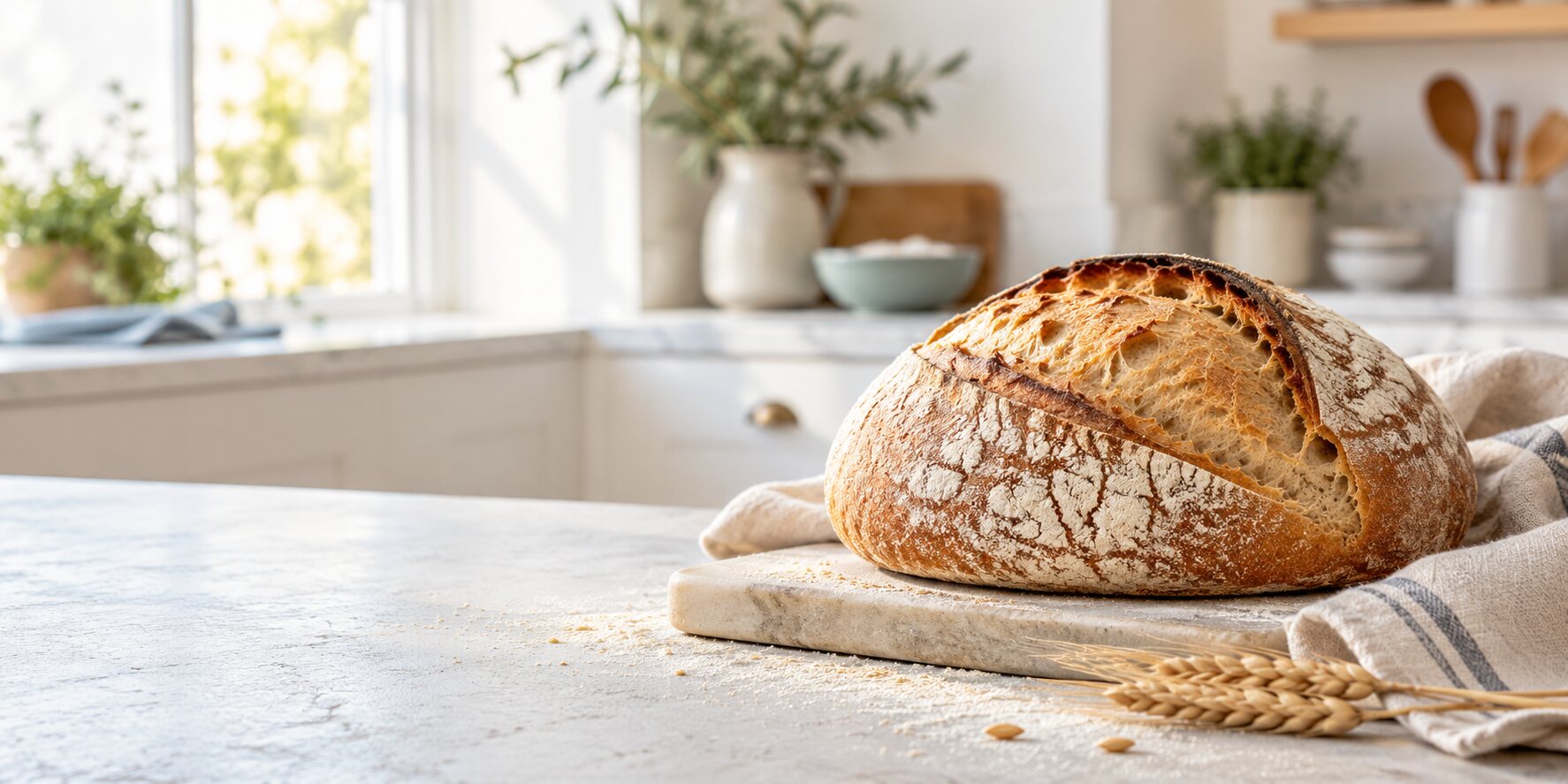
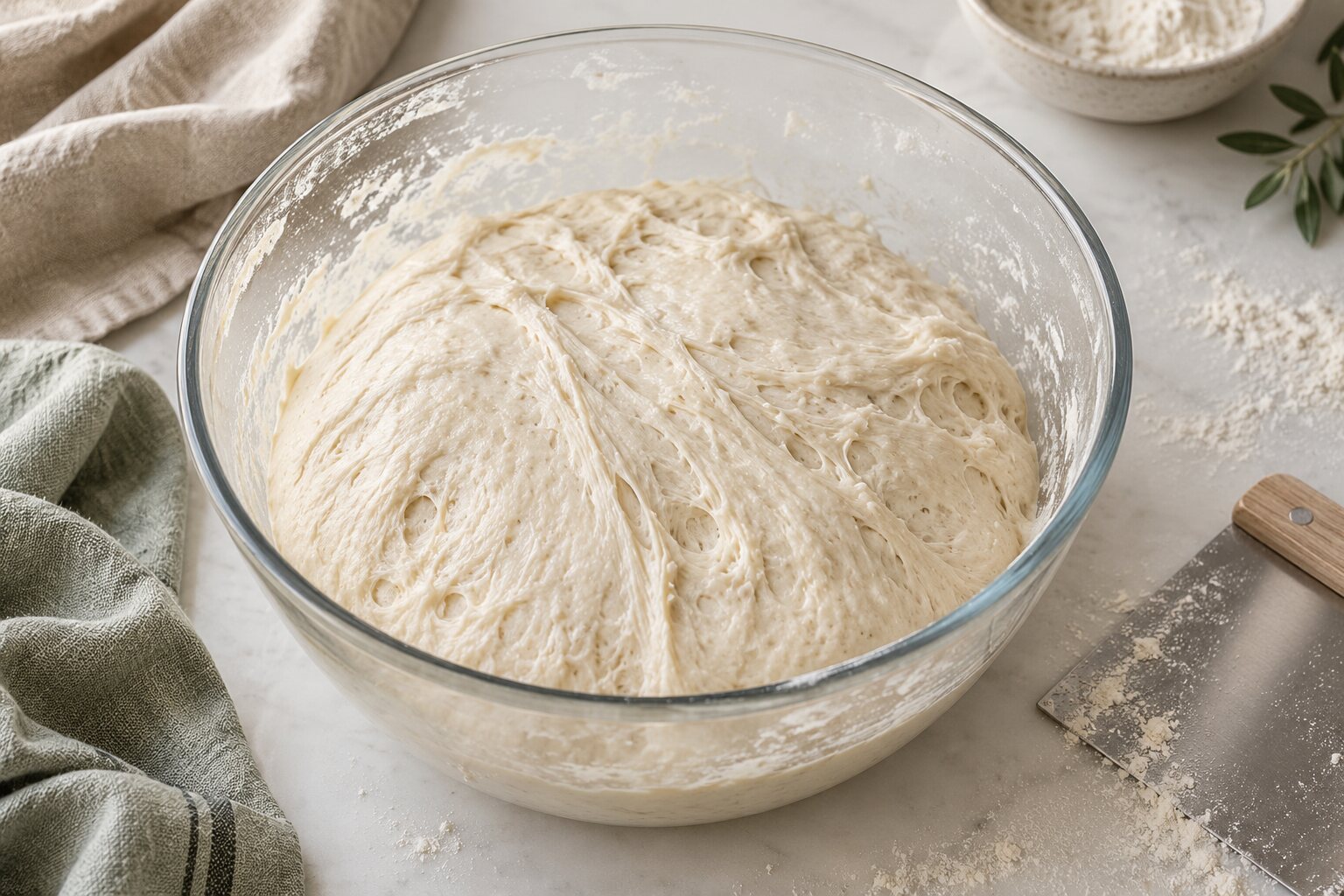
Underproofed dough springs aggressively and often cracks in unexpected places. Overproofed dough feels weak, spreads, and has little oven spring. A ready dough feels puffy and responds slowly to a gentle press.
What sourdough proofing means
Proofing is the final fermentation after shaping and before baking. During this stage, the dough builds gas and becomes lighter. The challenge is stopping at the right moment: too early and the dough is tight; too late and it loses strength.
Signs of underproofed dough
Underproofed dough has not built enough gas before baking. It may feel firm and tight, resist shaping, and spring back immediately when pressed. In the oven, it can burst at the score or at a random weak spot. The crumb is often dense, with a large hollow pocket near the top.
How to fix it next time
- Let bulk fermentation continue longer before shaping.
- Give the shaped loaf more final-proof time at room temperature.
- Use a stronger starter and make sure it is near peak activity.
- Avoid putting a very cold, newly shaped loaf directly into the oven unless the recipe is designed for it.
Signs of overproofed dough
Overproofed dough has fermented too far and lost the strength needed to hold gas. It may feel fragile, sticky, and slack. When turned out, it can spread quickly. A gentle press may leave a dent that does not recover. The baked loaf may be flatter, with a tight or uneven crumb.
How to fix it next time
- Shorten the final proof or refrigerate earlier.
- Reduce dough temperature or use a larger feeding ratio for the starter.
- Shape more firmly while keeping enough surface tension.
- Watch for visual signs instead of waiting for a full double.
How to use the finger-poke test
Flour one finger and press the dough lightly about one centimetre. If it springs back immediately, it may need more time. If it slowly returns and leaves a slight impression, it is often ready. If the dent remains and the dough feels fragile, it may be overproofed. This test is only one clue; use it with volume and texture.
Room-temperature or cold proof?
A room-temperature proof is faster and makes the timing easy to observe. A cold proof in the fridge slows fermentation, firms the dough for scoring, and can fit an overnight schedule. The dough should usually have completed most of its fermentation before chilling; the fridge is not a magic reset button for under-fermented dough.
If you want one reliable beginner pathway, The Original Sourdough Bread Recipe walks through the order of bulk fermentation, shaping, proofing, and baking in a single recipe.
A practical evening example
If your dough finishes bulk at 18:00, shape it and leave it at room temperature for 45–90 minutes depending on your kitchen. Then refrigerate it overnight and bake the next morning. In a warm room, shorten the counter time; in a cool room, extend it while watching the dough rather than the clock.
Before you bake
- Does the loaf still hold its shape?
- Does it feel lighter than when it was shaped?
- Is the surface slightly puffy rather than tight?
- Does a gentle press spring back slowly?
- Has the dough already spent enough time fermenting during bulk?