A sourdough starter may not rise because it is too cold, too thin, underfed, overfed, or still young. Track the starting level, use a consistent ratio, and give it warmth and time.
Diagnose before you discard
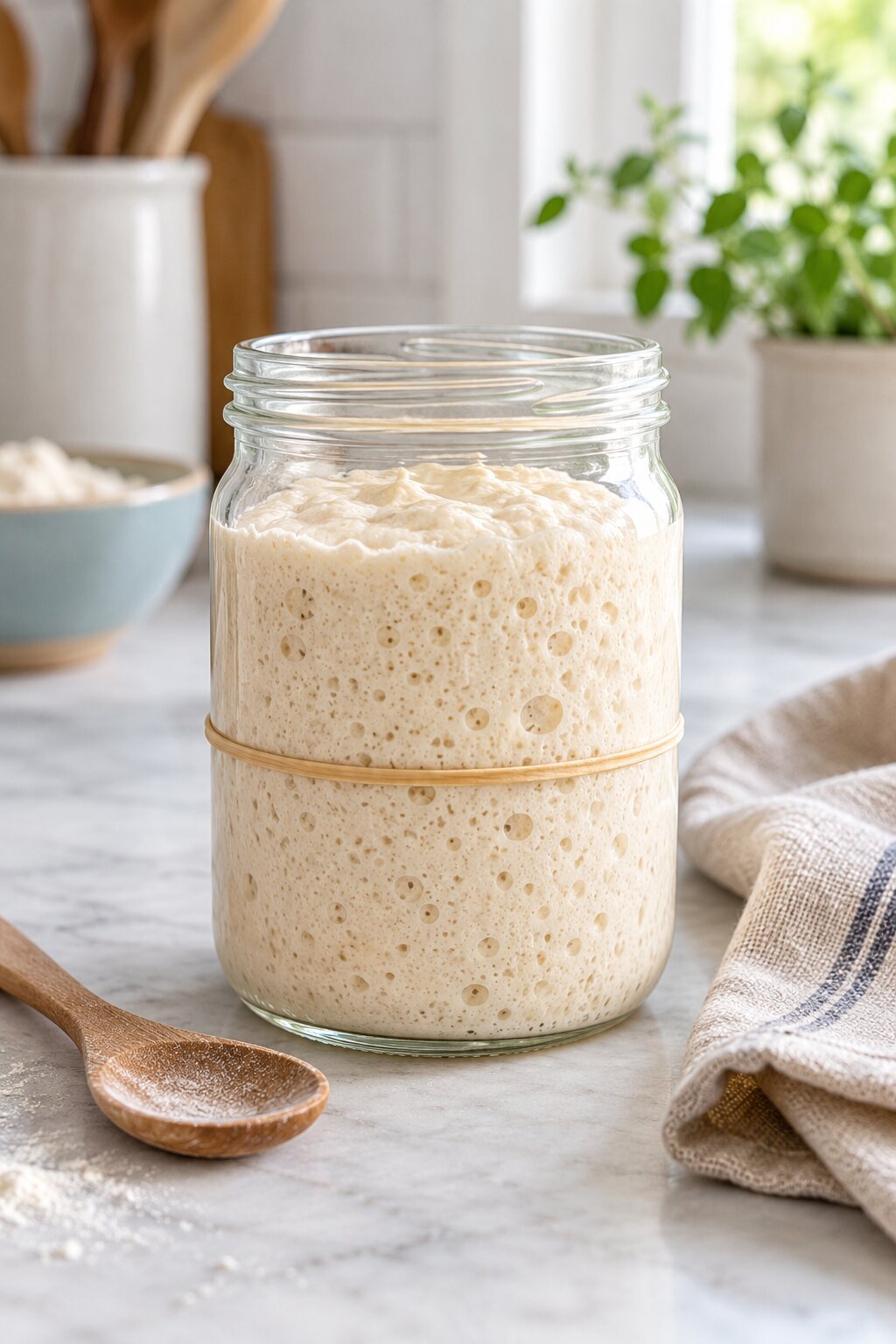
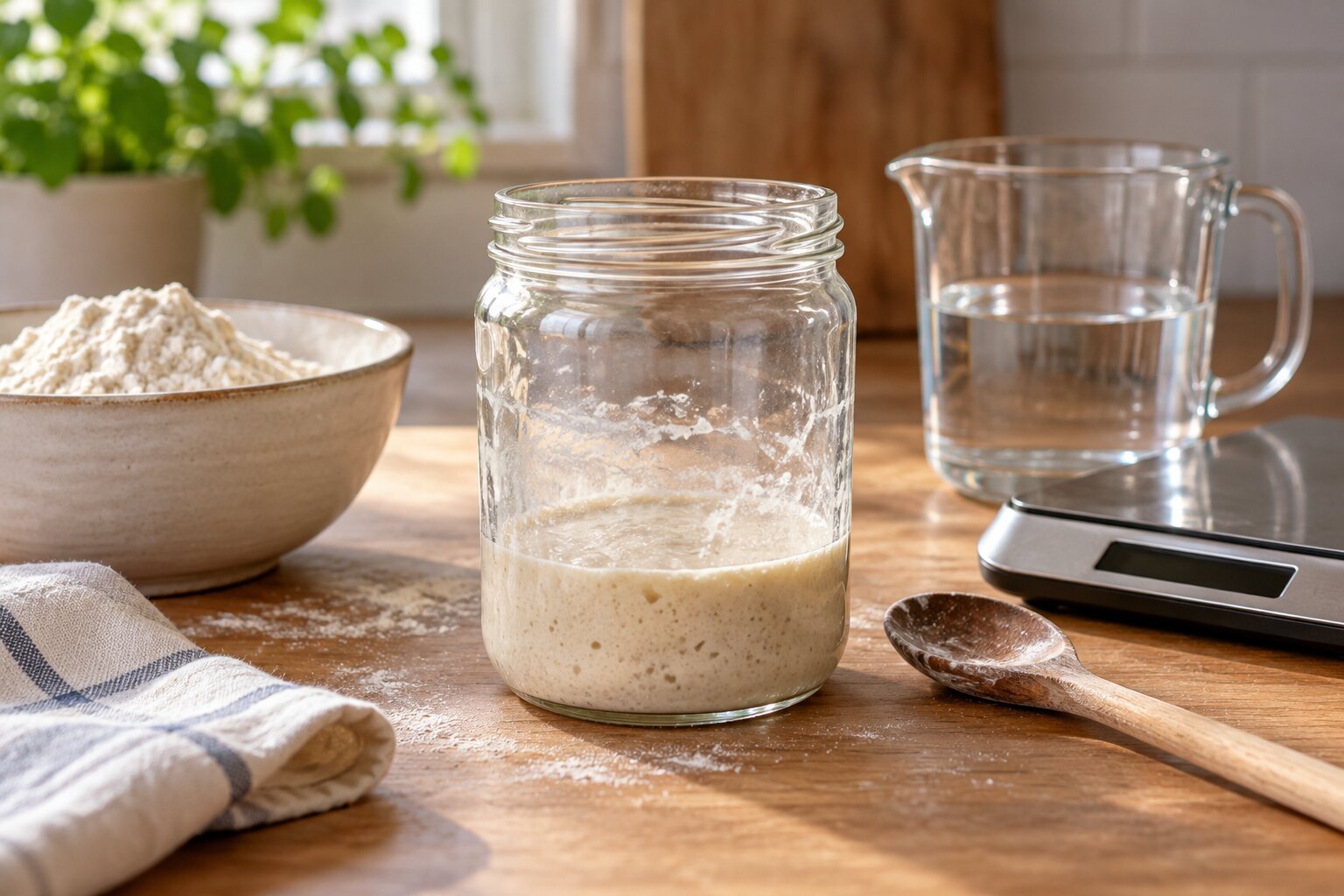
When a sourdough starter is not rising, the problem is usually not mysterious. A culture needs food, water, warmth, and enough time to ferment. If it has bubbles but no visible height, it may be fermenting in a loose jar or at a hydration that spreads instead of climbing.
The most likely causes and fixes
1. Check the temperature first
Fermentation slows dramatically in a cold kitchen. If your room is around 18°C, a starter that normally peaks in eight hours might need much longer. Place the jar in a stable, draft-free spot, such as inside a switched-off oven with the light off. Avoid direct heat, which can overheat the culture.
2. Use a consistent feeding ratio
For a simple reset, keep 20 g starter and mix in 20 g water plus 20 g flour for a 1:1:1 feeding by weight. If it peaks too quickly, keep 10 g starter and use 30 g each water and flour for a 1:3:3 feeding. The best ratio is the one that gives you a predictable rise in your schedule.
3. Choose flour with enough food
A starter can be maintained with white bread flour, but adding a portion of whole-wheat or rye flour often gives a sluggish culture more minerals and fermentation activity. Try replacing 25–50% of the flour in a feeding for several cycles, then return to your preferred blend once the rise is reliable.
4. Give it time and track the rise
Do not judge a feeding after two hours if your kitchen is cool. Mark the level and take notes at regular intervals. For example, if you feed at 19:00 and it is still flat at 07:00, look for smell and bubbles before feeding again. Repeatedly feeding too early can dilute a culture before it has had time to multiply.
When should you start over?
A grey liquid on top can be hooch and is usually a sign of hunger. Mold, fuzzy growth, or pink and orange discoloration is different: discard the culture and clean the jar. When in doubt, safety matters more than saving a small amount of flour.
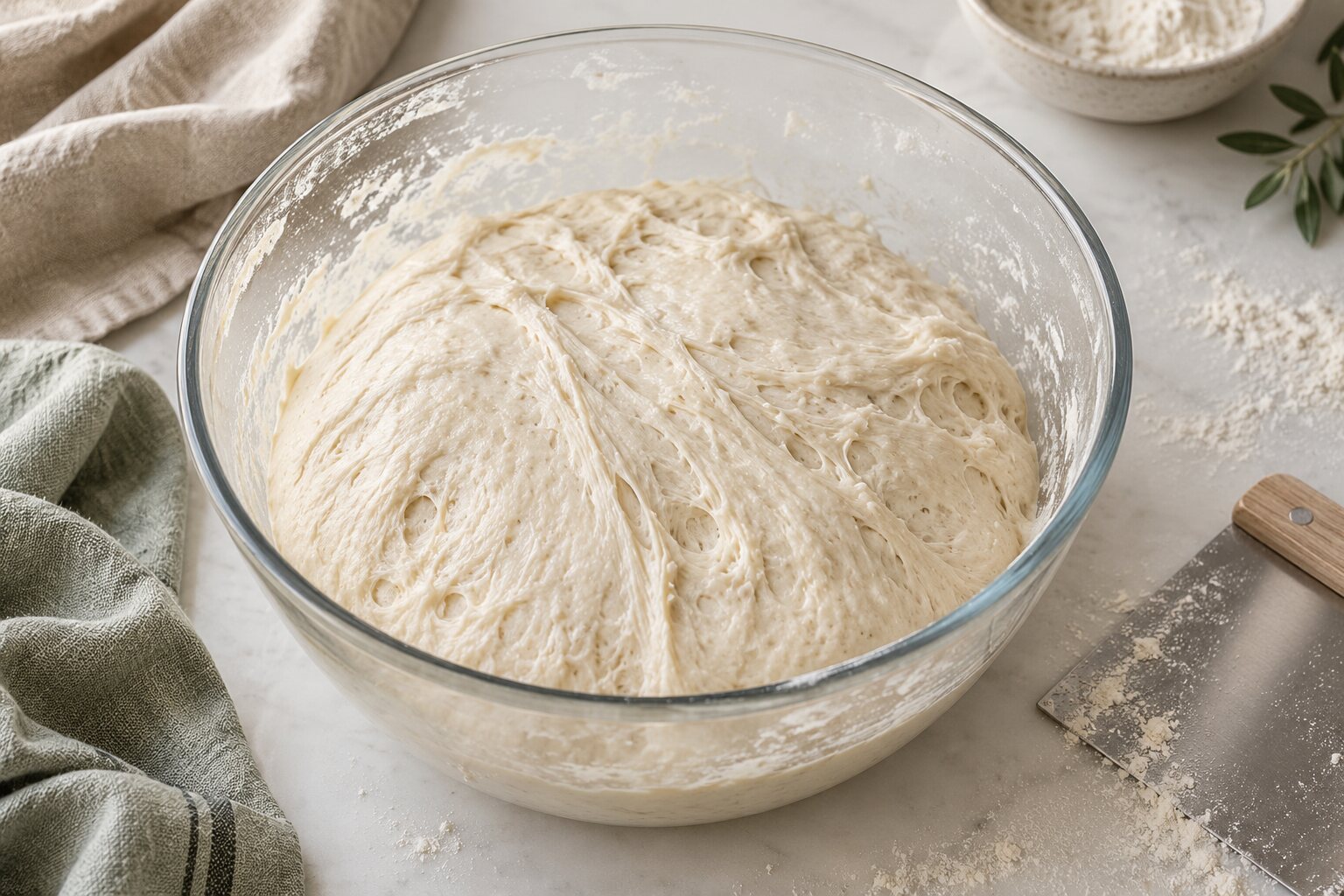
Once your starter begins rising reliably, use it in a process you can repeat. This complete beginner sourdough recipe connects starter readiness with mixing, fermentation, shaping, and baking so you are not guessing at the next stage.
A simple prevention routine
- Feed at roughly the same time for a few days.
- Use a clean jar and a straight-sided shape.
- Record the feeding ratio and room temperature.
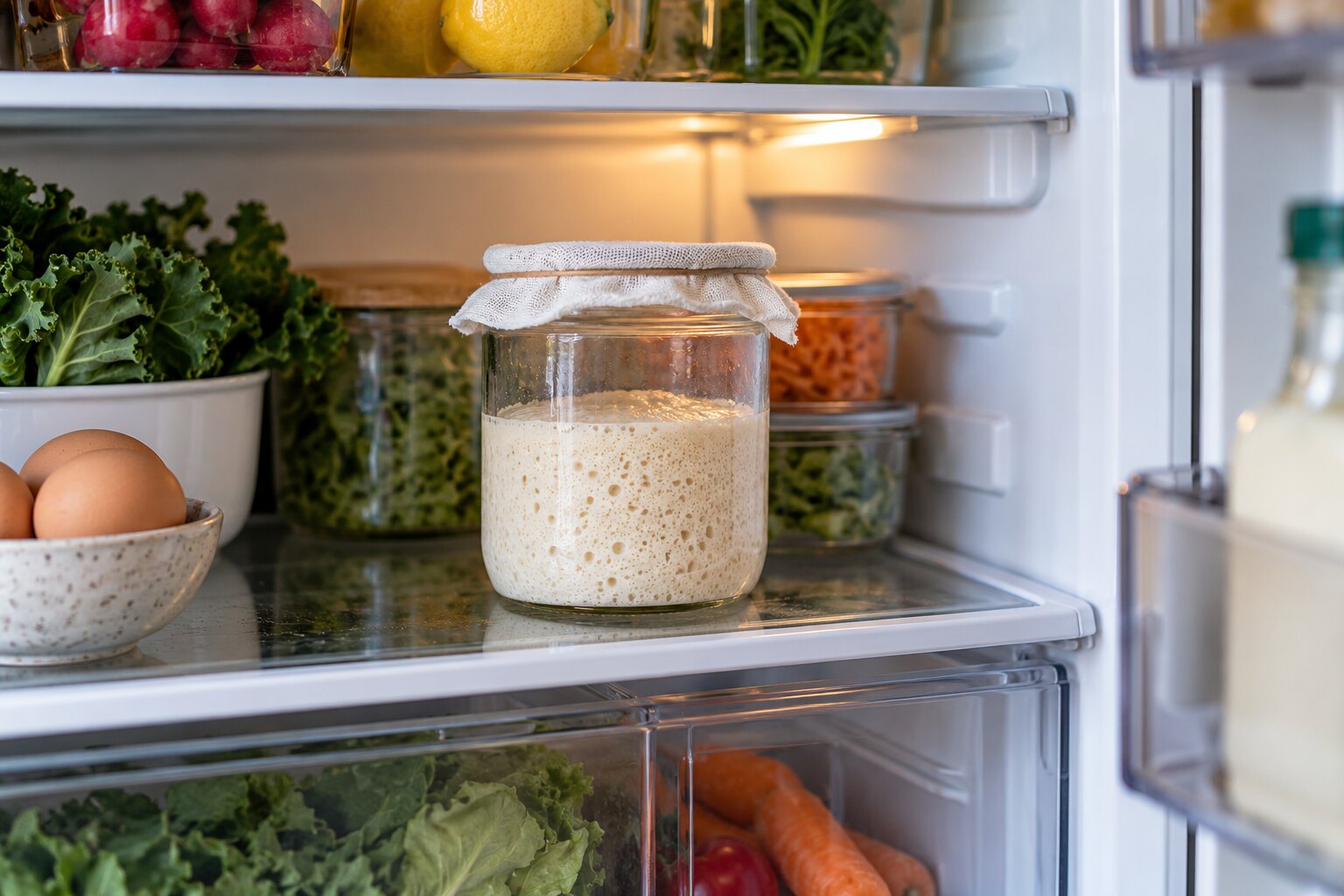
- Keep a small backup portion in the fridge once the starter is strong.
- Change only one variable at a time.