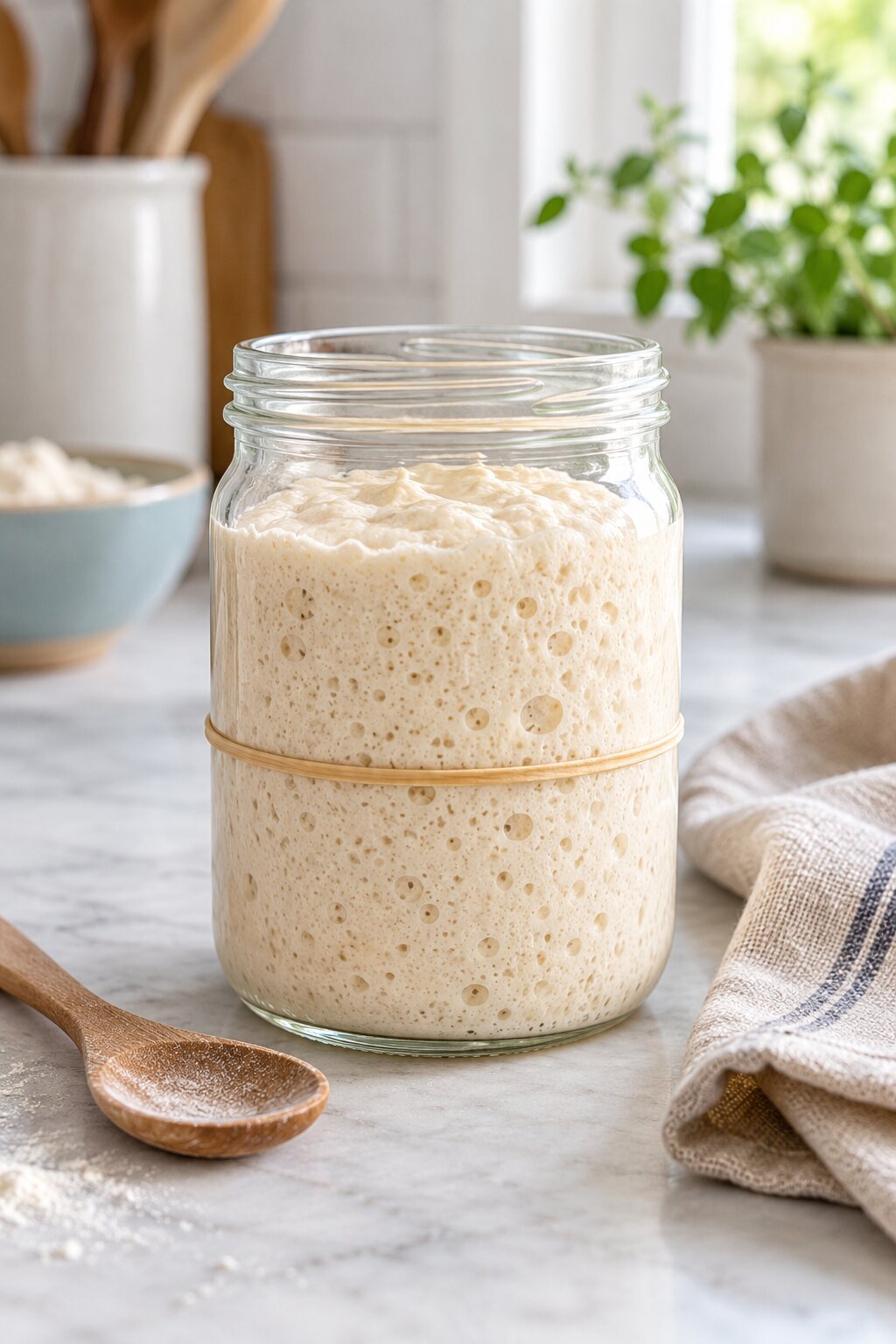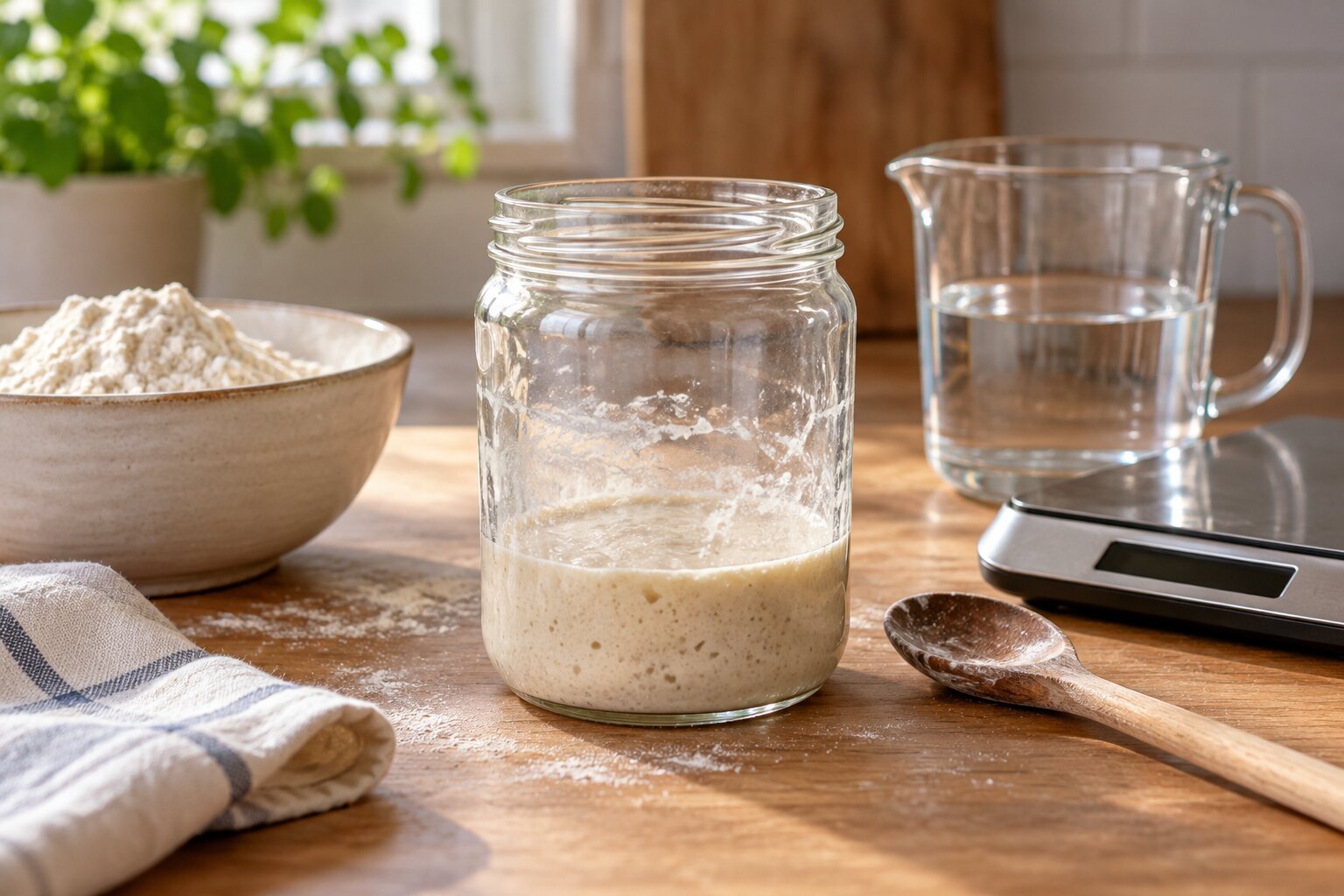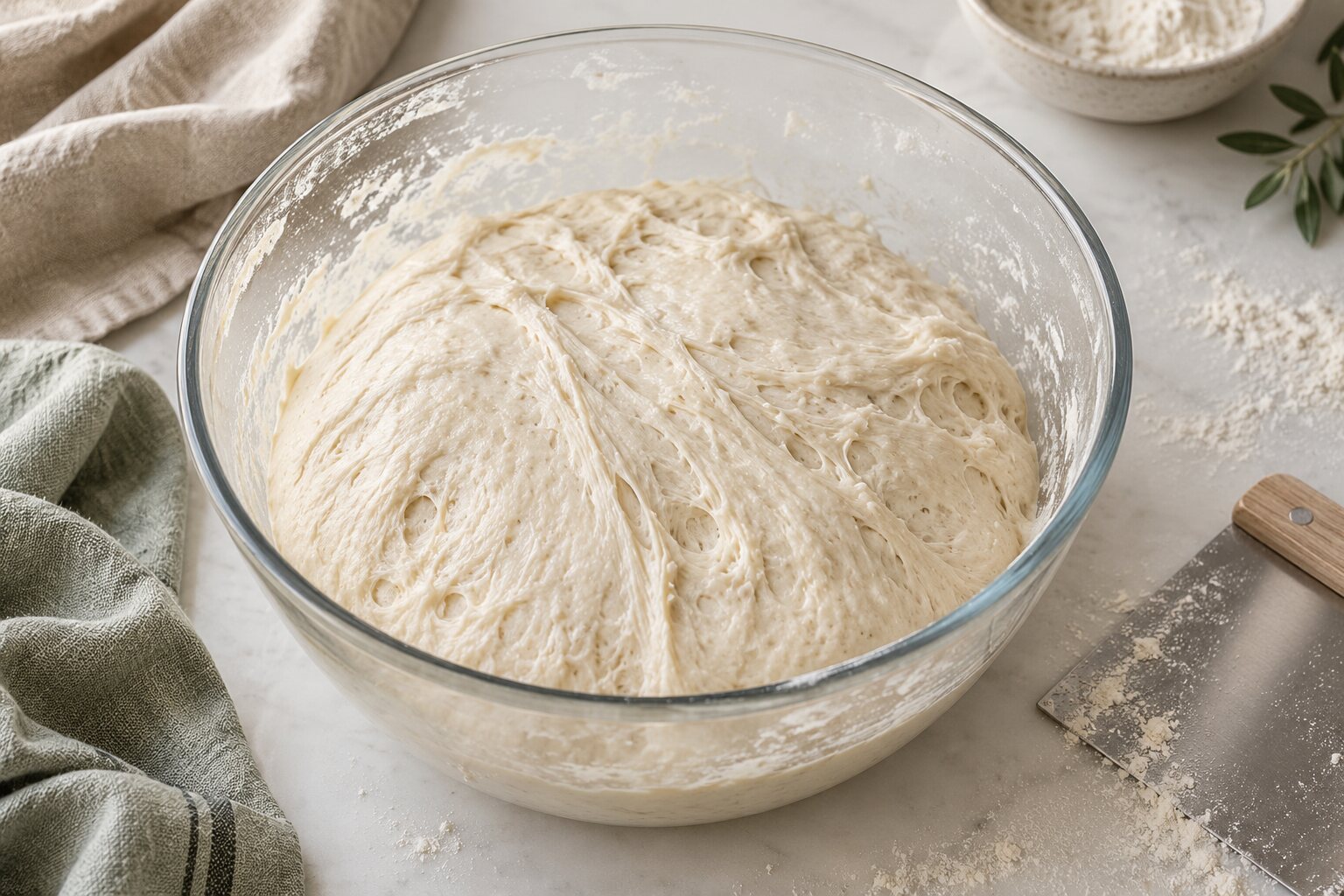
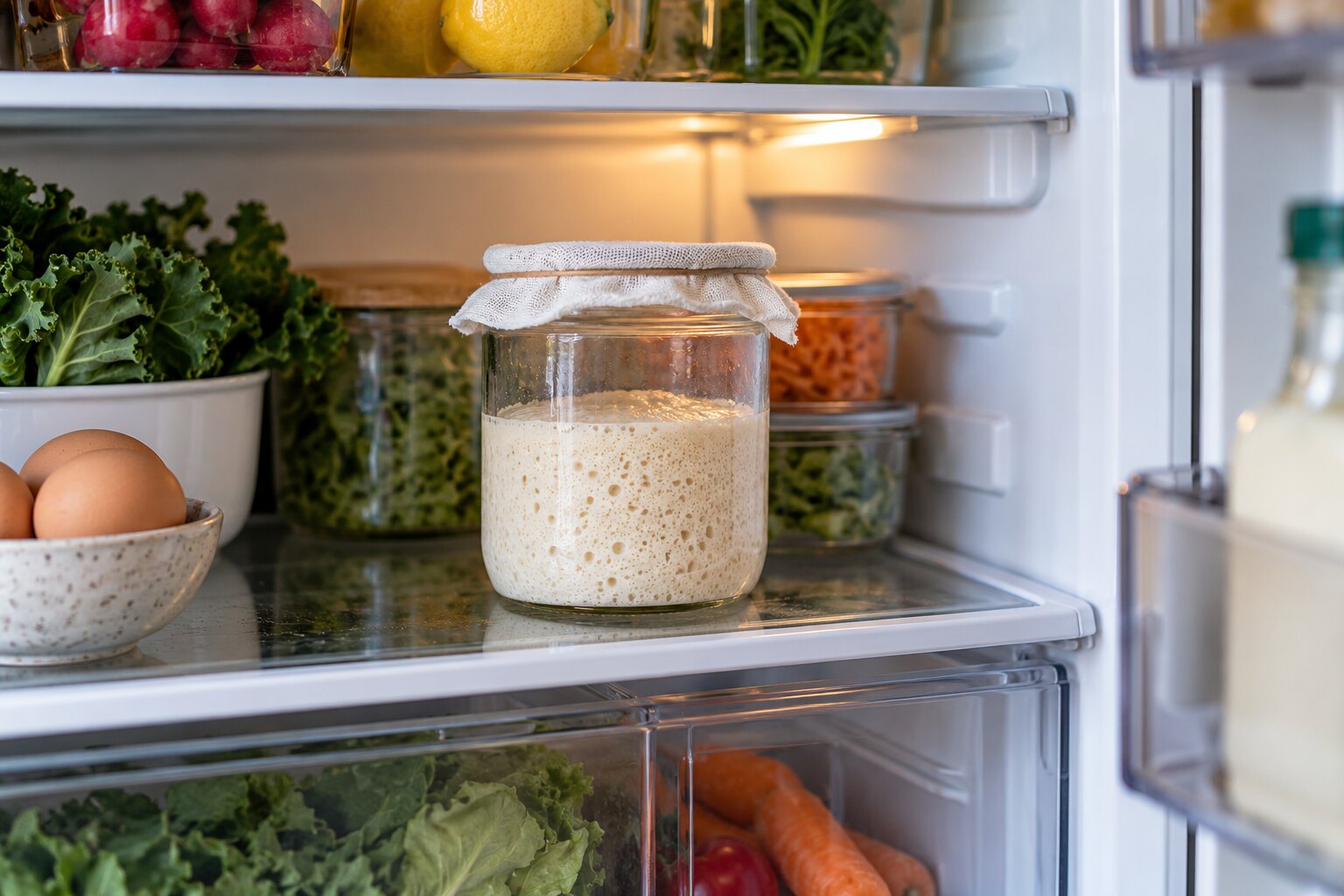
Feed your active starter, let it begin fermenting at room temperature for a short while, then cover it loosely and refrigerate it. Refresh it before baking.
The easy fridge method
The refrigerator slows fermentation, so you do not need to feed a starter every day. This is helpful if you bake once a week or want a low-maintenance routine. The starter should be healthy before it goes in: active, pleasantly tangy, and free from mold or unusual colors.
Before you refrigerate your starter
Keep 20–30 g starter in a clean jar and feed it with equal weights of flour and water, or use a larger feeding if you will be away longer. Let it sit for one to three hours, depending on room temperature. You are looking for the first signs of activity rather than a full peak.
Leave enough headspace for expansion. Close the lid, but do not tighten it so much that pressure cannot escape. Store the jar toward the back of the fridge where the temperature is more stable, not in the door.
How often should refrigerated starter be fed?
For many home bakers, a weekly refresh is a practical starting point. A mature starter can often go longer, but it may take more feedings to become strong again. If you bake only once a month, keep a small backup and expect to refresh it over a day or two before using it.
How to revive starter from the fridge
- 01Take the jar out and let it lose the chill for 30–60 minutes.
- 02If there is a dark liquid on top, stir it in for a more acidic flavor or pour it off for a milder refresh.
- 03Keep a small amount and feed it with equal weights of flour and water.
- 04Mark the level and leave it at room temperature until it rises noticeably.
- 05Repeat once or twice if it is slow, then bake when it doubles predictably and smells fresh.
What the liquid on top means
A thin grey or brown liquid, often called hooch, usually means the starter is hungry. It is not the same as fuzzy mold or pink and orange streaks. Stirring it in creates a more acidic flavor; pouring it off and feeding creates a milder profile. If the starter smells rotten or shows mold, discard it.
A realistic weekly schedule
Imagine you bake on Saturday morning. On Friday at 08:00, remove the starter and feed it. If it rises quickly, make your levain or dough Friday evening. If it is slow, give it another refresh Friday afternoon. This flexible schedule is more reliable than taking a cold starter directly from the fridge and expecting it to raise dough immediately.
For the full bake-day sequence, the step-by-step sourdough bread guide can help you connect a revived starter with the rest of the process.
Storage mistakes to avoid
- Refrigerating a starter that is already moldy or discolored.
- Filling the jar so high that it cannot expand.
- Assuming one cold feeding is always enough before baking.
- Leaving the jar uncovered so the surface dries out.
- Changing flour, water, and feeding ratio all at once when reviving it.