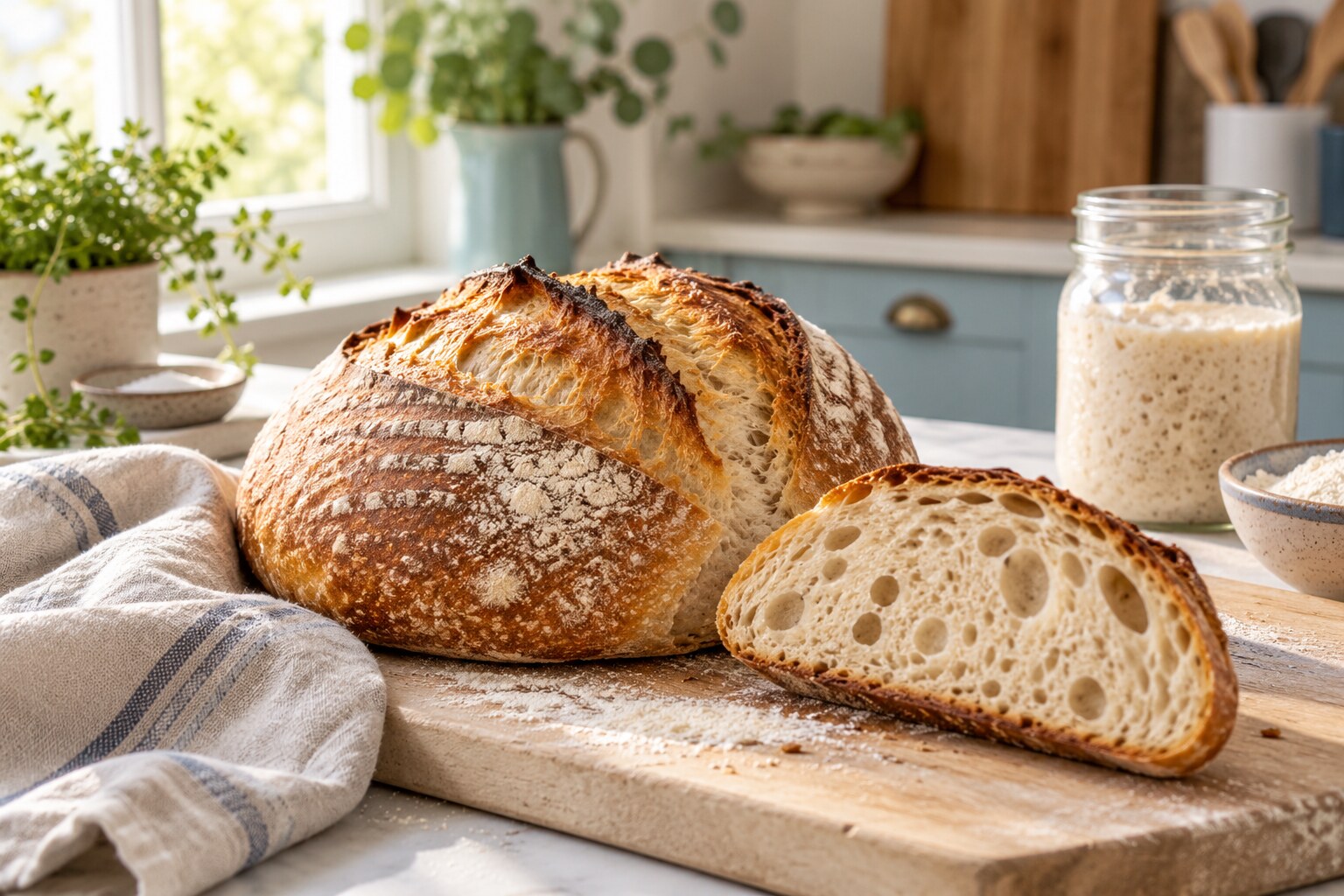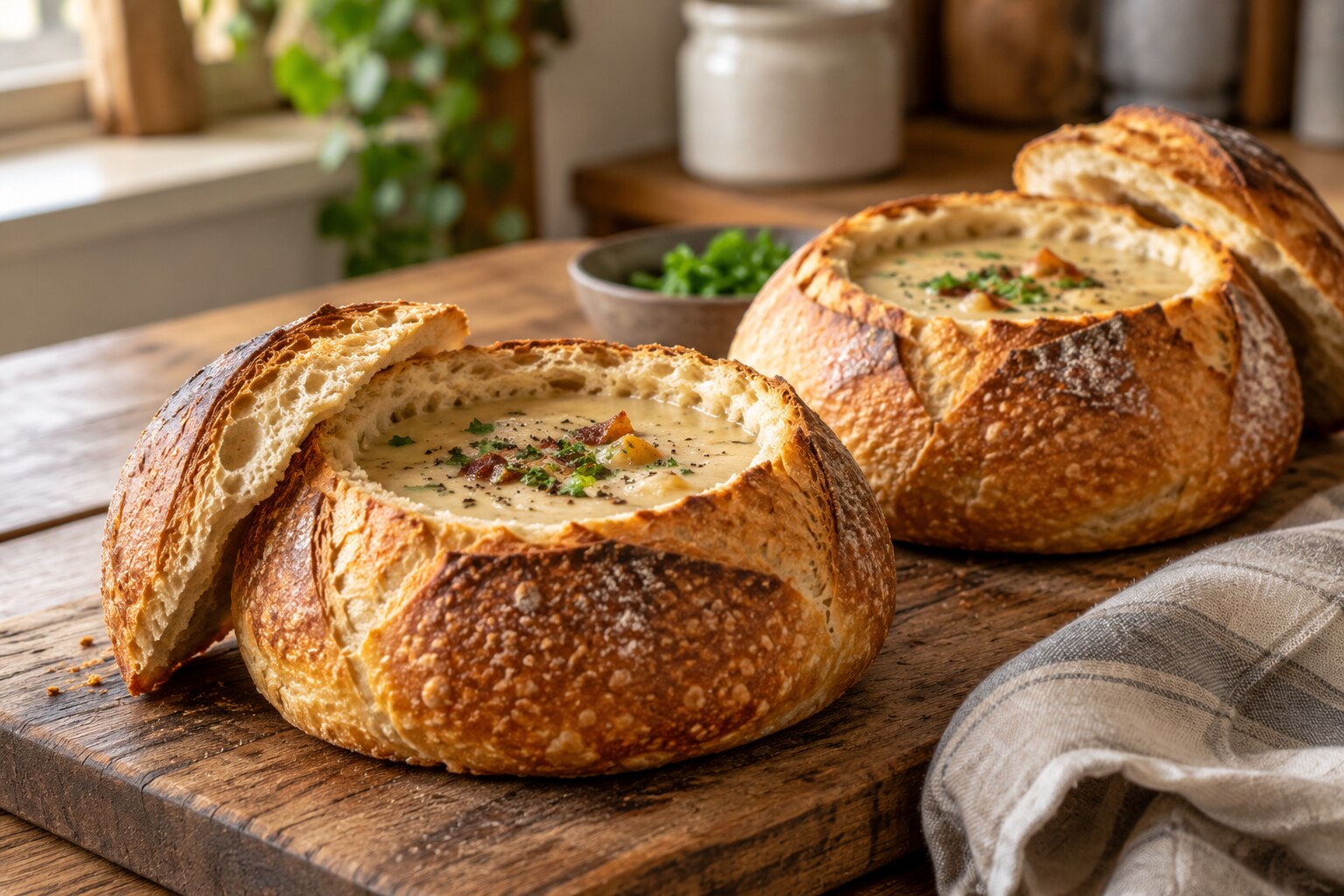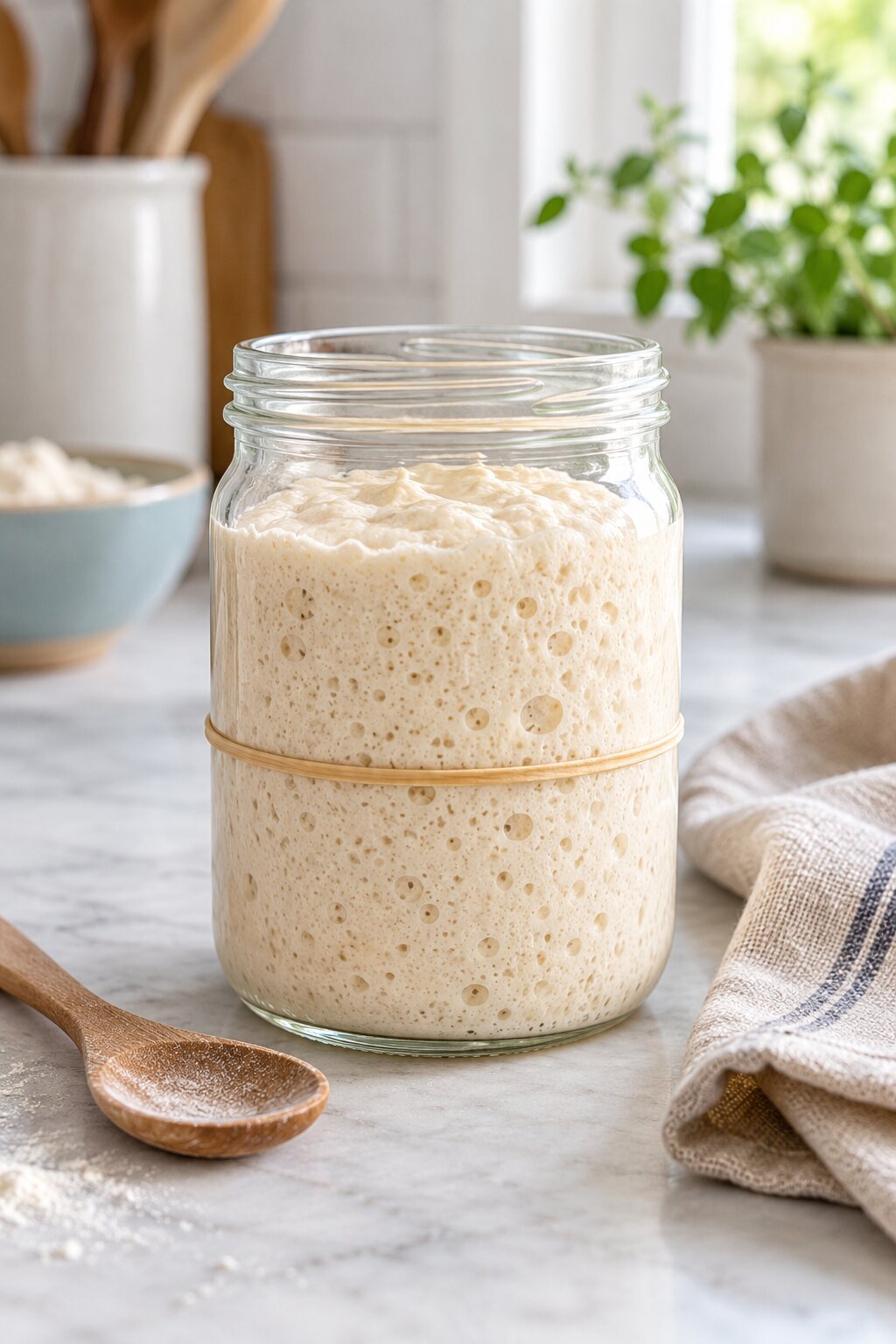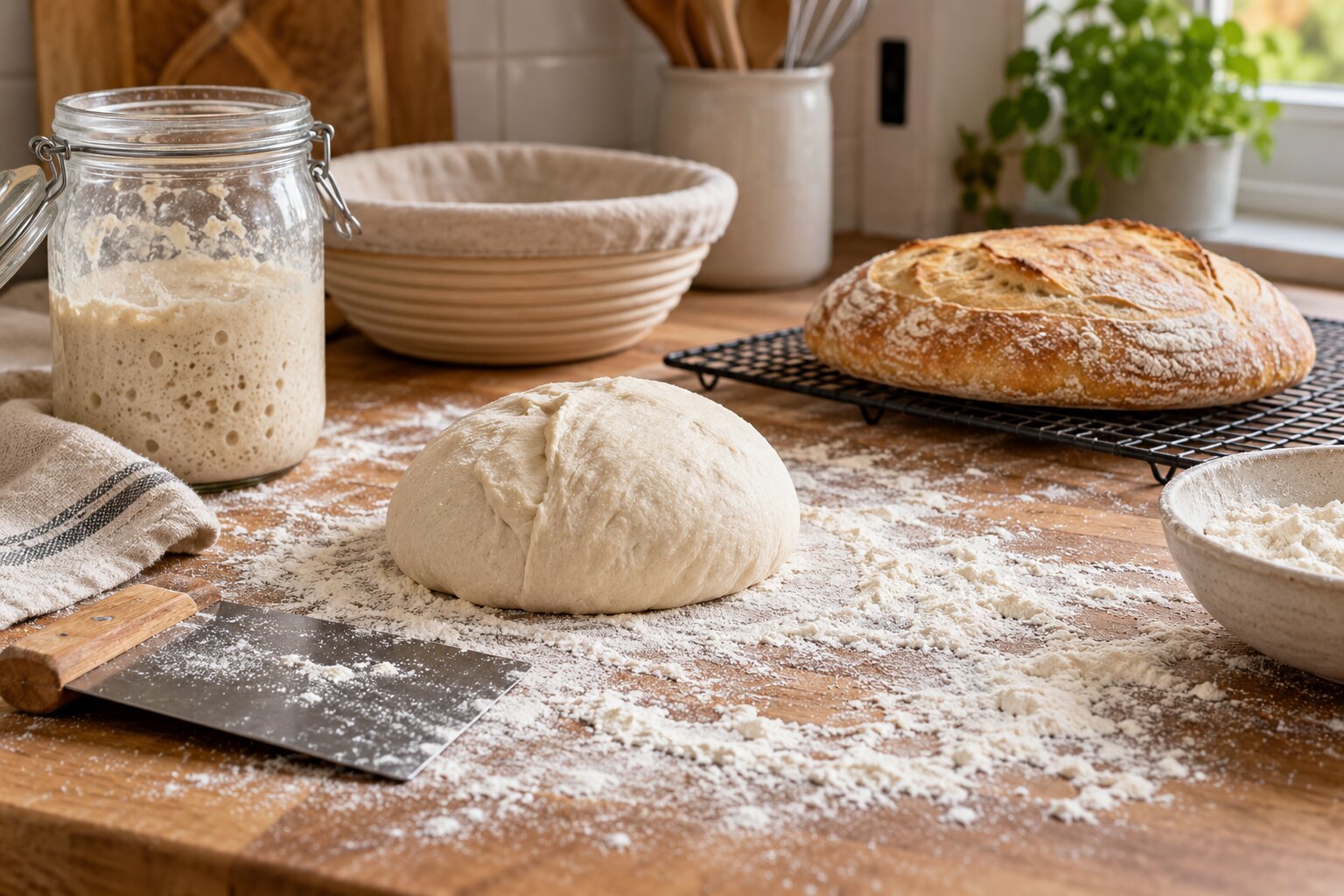
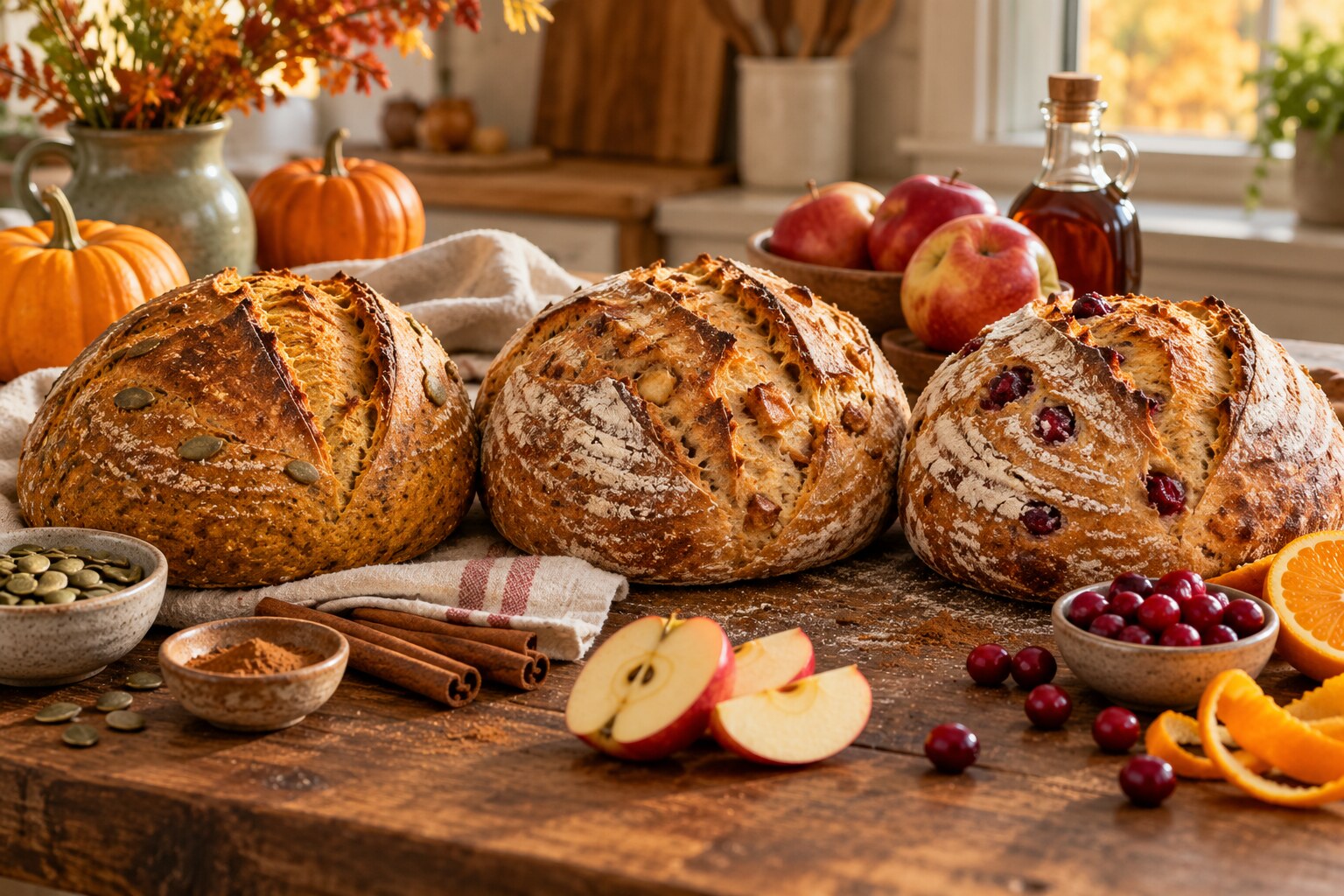
Start with your usual sourdough dough, then add one balanced combination of seasonal fruit, spices, cheese, herbs, seeds, or roasted vegetables during folds or shaping. Keep wet add-ins moderate so the loaf still rises and holds its shape.
Start with a simple sourdough base
The easiest way to experiment with seasonal sourdough is to keep the dough familiar and change only the flavor additions. A dependable starting point is 500 g bread flour, 350 g water, 100 g active sourdough starter, and 10 g salt. If an addition brings extra moisture or sweetness, hold back a little water or expect the dough to ferment more slowly.
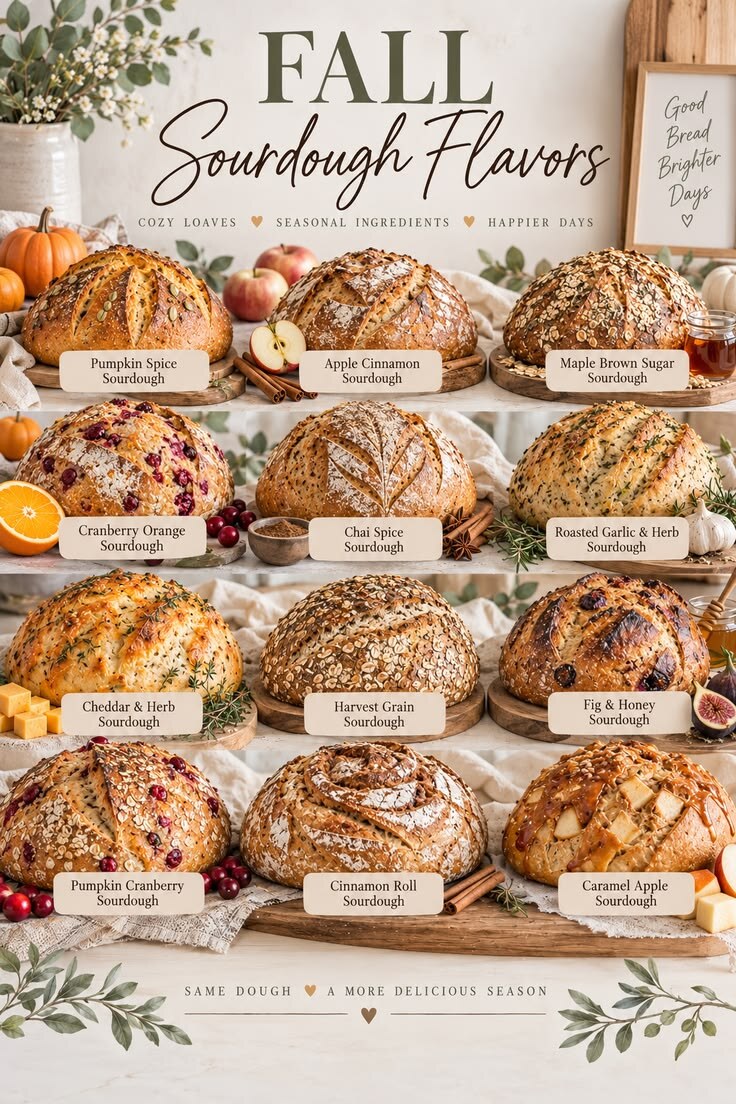
12 fall sourdough flavors to try
1. Pumpkin spice sourdough
Mix a little pumpkin puree with pumpkin spice for a soft, warmly scented loaf. Start with 60–80 g puree and reduce the water slightly so the dough does not become loose. Add the puree with the starter, then fold in the spice once the dough begins to strengthen.
2. Apple cinnamon sourdough
Use one firm apple, diced small, with 1 teaspoon cinnamon. Pat the apple dry and toss it with a little flour before adding it during the second fold. The small pieces spread the flavor through the loaf without creating large wet pockets.
3. Maple brown sugar sourdough
For a gently sweet loaf, add 25–35 g maple syrup, 30–40 g brown sugar, and a pinch of cinnamon. Because sugar can slow fermentation and soften the dough, add the syrup with the starter and allow extra time for the rise.
4. Cranberry orange sourdough
Soak 80–100 g dried cranberries briefly in warm water, drain them well, and combine them with the zest of one orange. Add them during the second or third fold. The bright citrus balances the tart fruit and works especially well with a naturally tangy starter.
5. Chai spice sourdough
Add 1½–2 teaspoons of a balanced chai spice blend with a little brown sugar if you prefer a sweeter loaf. Cinnamon, cardamom, ginger, cloves, and black pepper give the bread a warm aroma without needing a heavy filling.
6. Roasted garlic and herb sourdough
Roast one head of garlic until soft, then cool it before adding the cloves with chopped rosemary, thyme, or sage. Fold the garlic in gently during the second fold. This savory loaf is excellent with soup, cheese, or a simple autumn meal.
7. Cheddar and herb sourdough
Add 80–100 g chilled cheddar cubes with chopped chives, thyme, or rosemary. Cubes usually work better than finely grated cheese because they create pockets without disappearing into the dough. Add them during the second or third fold and keep the dough cool.
8. Harvest grain sourdough
Combine pumpkin seeds, sunflower seeds, rolled oats, and a few sesame seeds for a nutty loaf with extra texture. Use about 80–100 g total and soak very dry seeds first so they do not pull moisture from the dough.
9. Fig and honey sourdough
Chop 80–100 g dried figs and add 20–25 g honey with a little fresh thyme. Soak the figs if they are firm, then drain and pat them dry. Add the fruit during folds and use a gentle hand so the pieces do not tear the gluten.
10. Pumpkin cranberry sourdough
Combine 60–80 g pumpkin puree with 70–80 g dried cranberries and a small amount of pumpkin spice. This loaf has a soft autumn color and a sweet-tart contrast. Reduce the water slightly for the puree and add the cranberries after the dough has some strength.
11. Cinnamon roll sourdough
For a loaf inspired by cinnamon rolls, spread a thin layer of brown sugar, cinnamon, and softened butter over the dough during final shaping. Keep the layer light so it does not create a slippery seam, then roll firmly and seal the edge before placing the loaf in its basket.
12. Caramel apple sourdough
Use small pieces of a firm apple with a few chilled soft caramel pieces and a pinch of flaky salt. Add this combination during shaping rather than early folds to reduce leaking and keep the caramel from burning against the outside crust.
How to add seasonal mix-ins without weakening the dough
- 01Mix the flour and water first, then give the dough a short rest so it begins to develop structure.
- 02Add the starter and salt and work the dough until it becomes more cohesive.
- 03Complete the first fold before adding larger fruit, cheese, herbs, or roasted vegetables.
- 04Add mix-ins during the second or third fold, spreading them over the dough before folding it over itself.
- 05Shape gently and watch the dough rather than the clock. Sweet, wet, or heavy additions can change the fermentation time.
| Flavor type | Best time to add it | Main thing to watch |
|---|---|---|
| Dried fruit and zest | Second or third fold | Drain fruit well so it does not add hidden water. |
| Fresh apple or pumpkin | Fold or final shaping | Reduce water and avoid large wet pieces. |
| Cheese and herbs | Second or third fold | Keep the dough cool and use small pieces. |
| Garlic and roasted vegetables | Second fold | Cool and drain them before adding. |
| Sugar, caramel, or fillings | With the starter or during shaping | Expect slower fermentation and watch for burning. |
Common problems with flavored sourdough
Baking and storing seasonal loaves
Bake flavored sourdough until the crust is deeply golden and the centre feels set. Sweet loaves can brown faster, so lower the temperature slightly or cover the top partway through if needed. Cool completely before slicing; warm fruit and sugar can make the crumb seem gummy even when the loaf is baked.
Most flavored loaves are best within two to three days. Keep them wrapped at room temperature, or slice and freeze them once cool. Savory garlic, herb, and cheese loaves are especially good toasted, while fruit loaves can be served with butter, yogurt, or a mild cheese.
Fall sourdough flavor FAQ
Can I use fresh fruit instead of dried fruit?
Yes, but fresh fruit brings more water. Use firm fruit, cut it small, pat it dry, and hold back some of the dough water. Add it after the dough has developed some strength.
Which flavors are easiest for a first try?
Dried cranberry orange, chai spice, harvest grain, and roasted garlic herb are forgiving because they add less free moisture than fresh fruit or puree. Begin with one flavor combination so you can see how it changes your dough.
Can I use these ideas with my usual sourdough recipe?
Yes. Keep your normal flour, starter, salt, and fermentation routine, then add one flavor combination at a time. If the dough contains extra water, sugar, or fat, allow the timing to adjust according to how the dough looks and feels.
For a dependable plain dough to use as the base for any of these flavors, start with Easy Sourdough Bread: Step-by-Step Guide and learn When Is Sourdough Starter Ready to Bake With? before mixing.