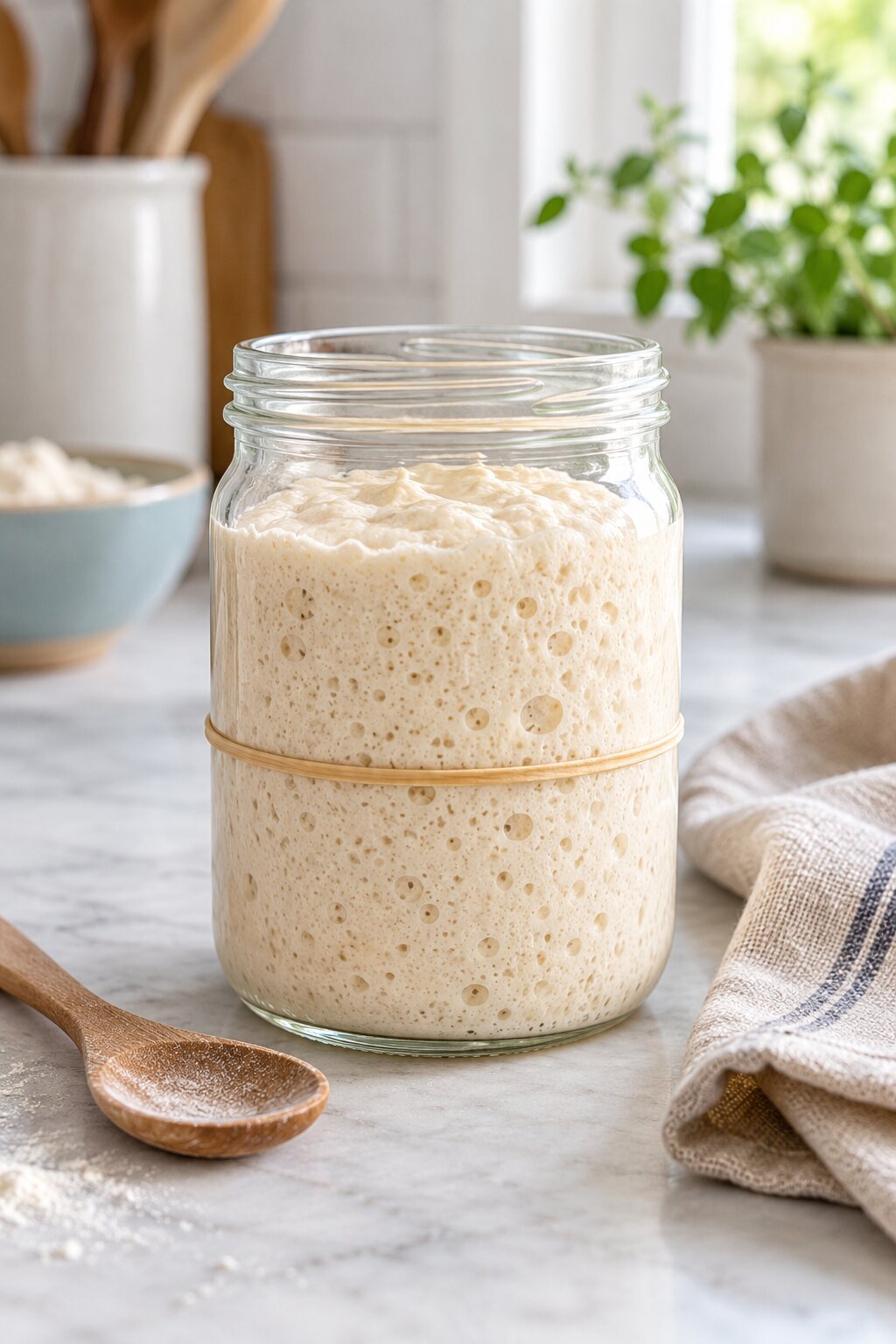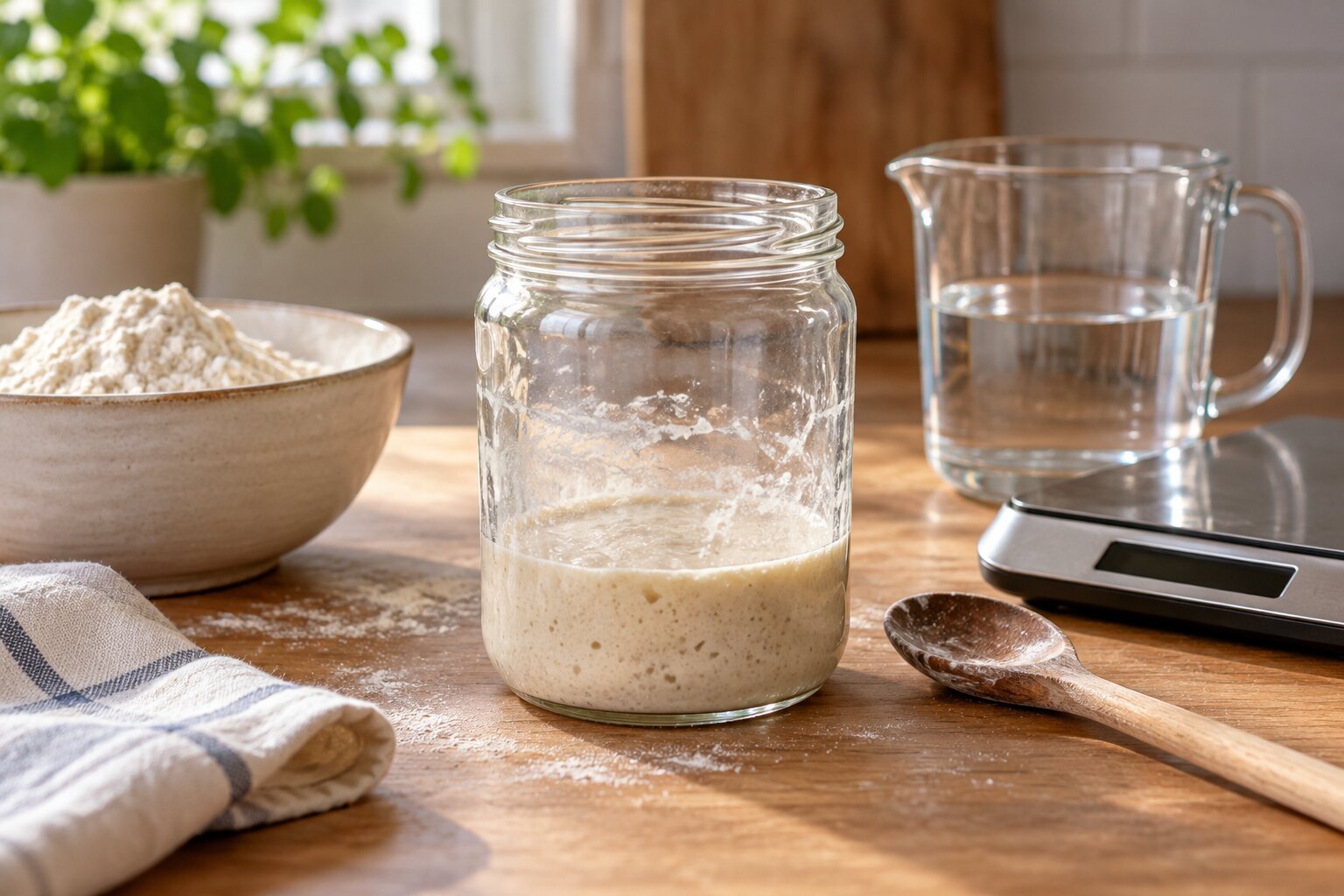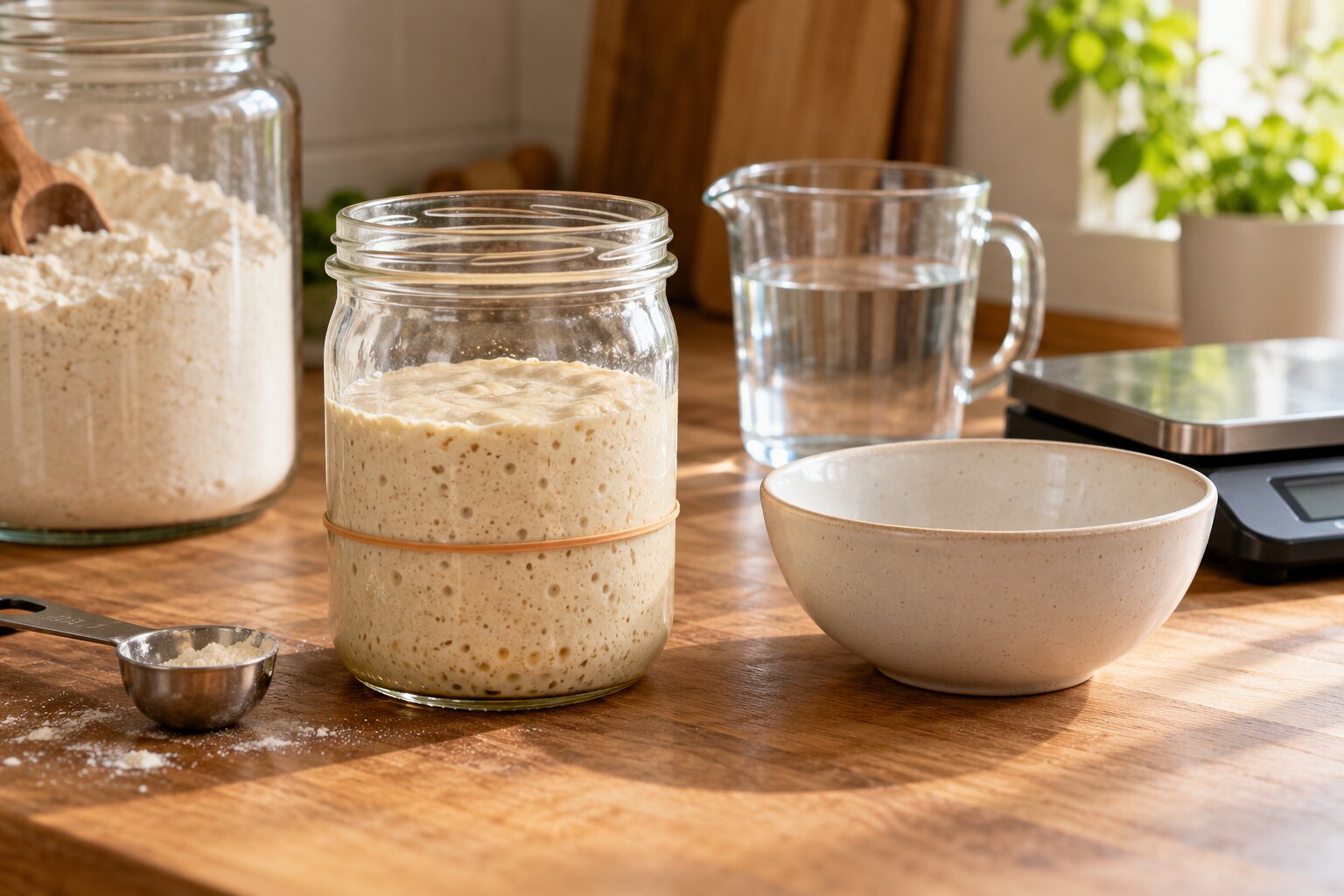
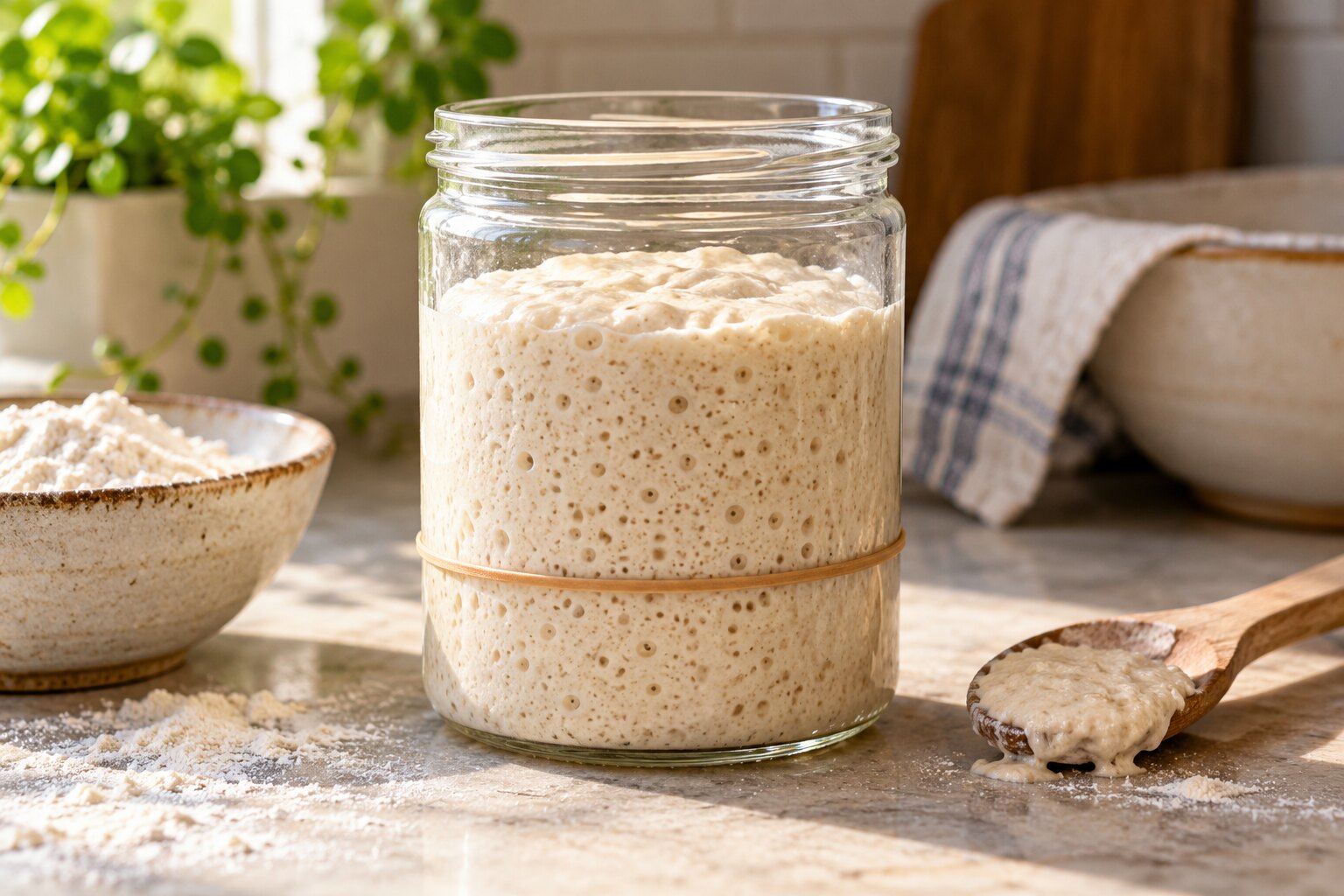
Healthy starter usually looks like a thick, aerated paste with bubbles through the jar, a visible rise, and a pleasantly tangy smell. It may look different with different flours, so track its normal pattern instead of chasing one perfect photo.
What healthy sourdough starter usually looks like
A healthy starter is usually a thick, bubbly mixture that rises after feeding and then slowly falls. It may be cream-colored, tan, or darker depending on the flour. The most important clue is not one exact color; it is whether the starter shows a repeatable pattern of activity.
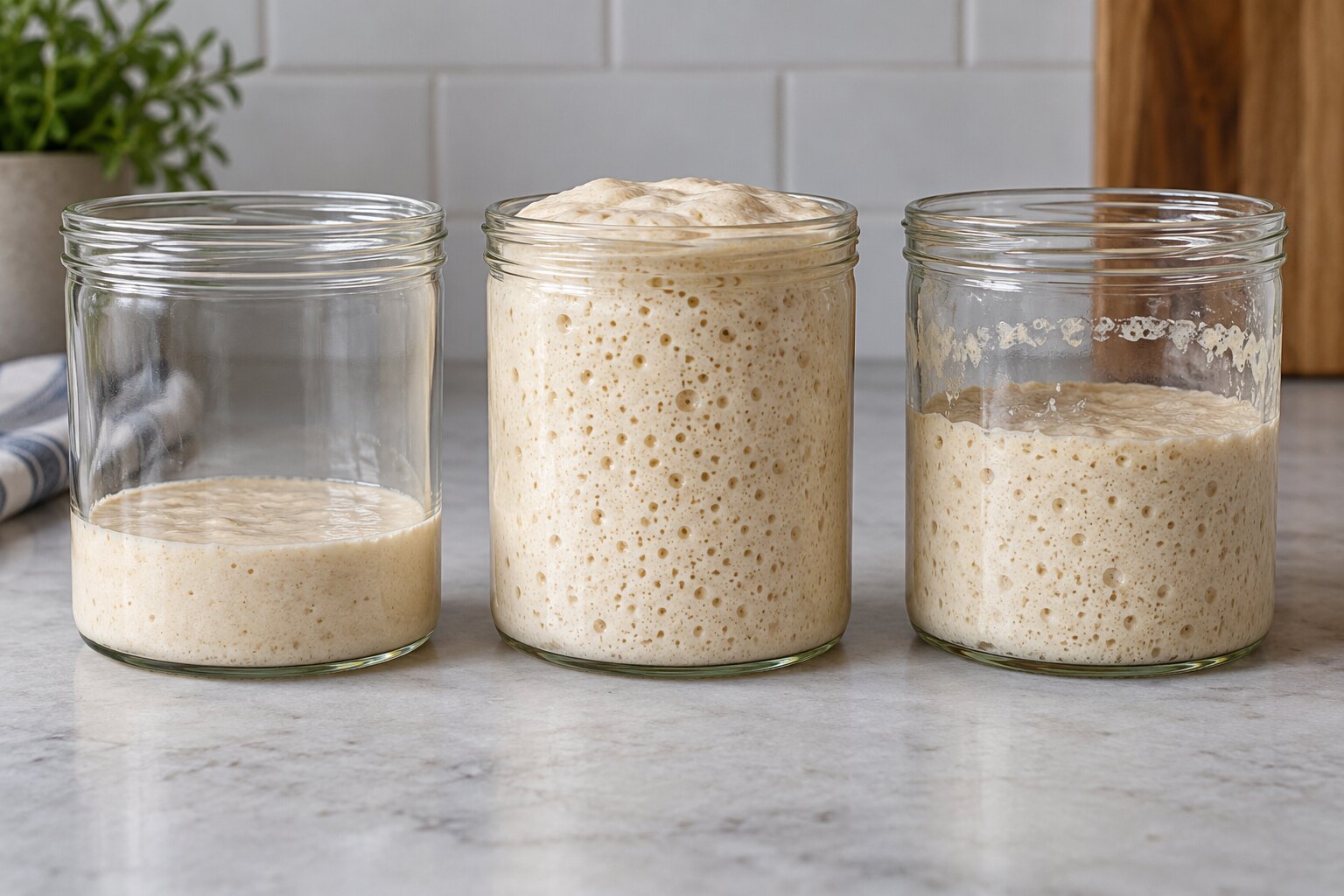
Signs of an active starter
- Bubbles are visible through the sides of the jar, not only on the surface.
- The mixture has risen above its starting mark after feeding.
- The top is rounded or gently domed near peak activity.
- The texture feels lighter and aerated when stirred.
- The aroma is pleasantly tangy, yeasty, fruity, or lightly yoghurt-like.
Freshly fed vs. ready to bake
| Stage | What it may look like | What to do |
|---|---|---|
| Freshly fed | Thick, smooth paste with few bubbles and a low level in the jar. | Mark the level and wait for fermentation to build. |
| Active and rising | Bubbles throughout, a higher level, and a rounded or domed top. | Watch it closely; this may be the useful baking window. |
| At peak | Light, aerated texture and a top that is just beginning to flatten. | Use it in dough or feed it according to your routine. |
| Past peak | A flat or sunken top, streaks on the jar, and a sharper smell. | Refresh it before baking if it has fallen significantly. |
| Concerning | Fuzzy growth, pink or orange streaks, or a truly rotten smell. | Do not taste it; discard the culture and clean the jar. |
How thick should sourdough starter be?
At 100% hydration, starter is often similar to a thick batter or soft paste. It should be easy to stir but not so watery that bubbles disappear immediately. Flour absorbs water differently, so use the rise, texture, and feeding ratio together. If it spreads like a liquid and shows bubbles without gaining height, try a slightly thicker feed and a narrower jar.
What if your starter looks quiet?
A quiet starter may be young, cold, too liquid, underfed, or simply between feedings. Mark the starting level, keep it comfortably warm, and give it time. The troubleshooting guide Why Is My Sourdough Starter Not Rising? walks through the most common causes.
What if it looks dark or has liquid on top?
A grey or brown liquid can be hooch, which often means the starter is hungry. Stir it in or pour it off, then refresh a small amount if the culture otherwise looks and smells normal. Fuzzy mold or pink and orange discoloration is different and is a reason to discard the culture.
When should you bake with it?
Use starter when it has risen predictably after feeding for at least a few cycles, has bubbles throughout the jar, and is near its normal peak. For a new culture, this may happen after a week or it may take longer. Read When Is Sourdough Starter Ready to Bake With? before relying on a single float test.
The easy rule
Do not ask whether your starter looks exactly like someone else’s photo. Ask whether it rises, smells, and behaves predictably after feeding. Your own jar’s pattern is the most useful visual guide.