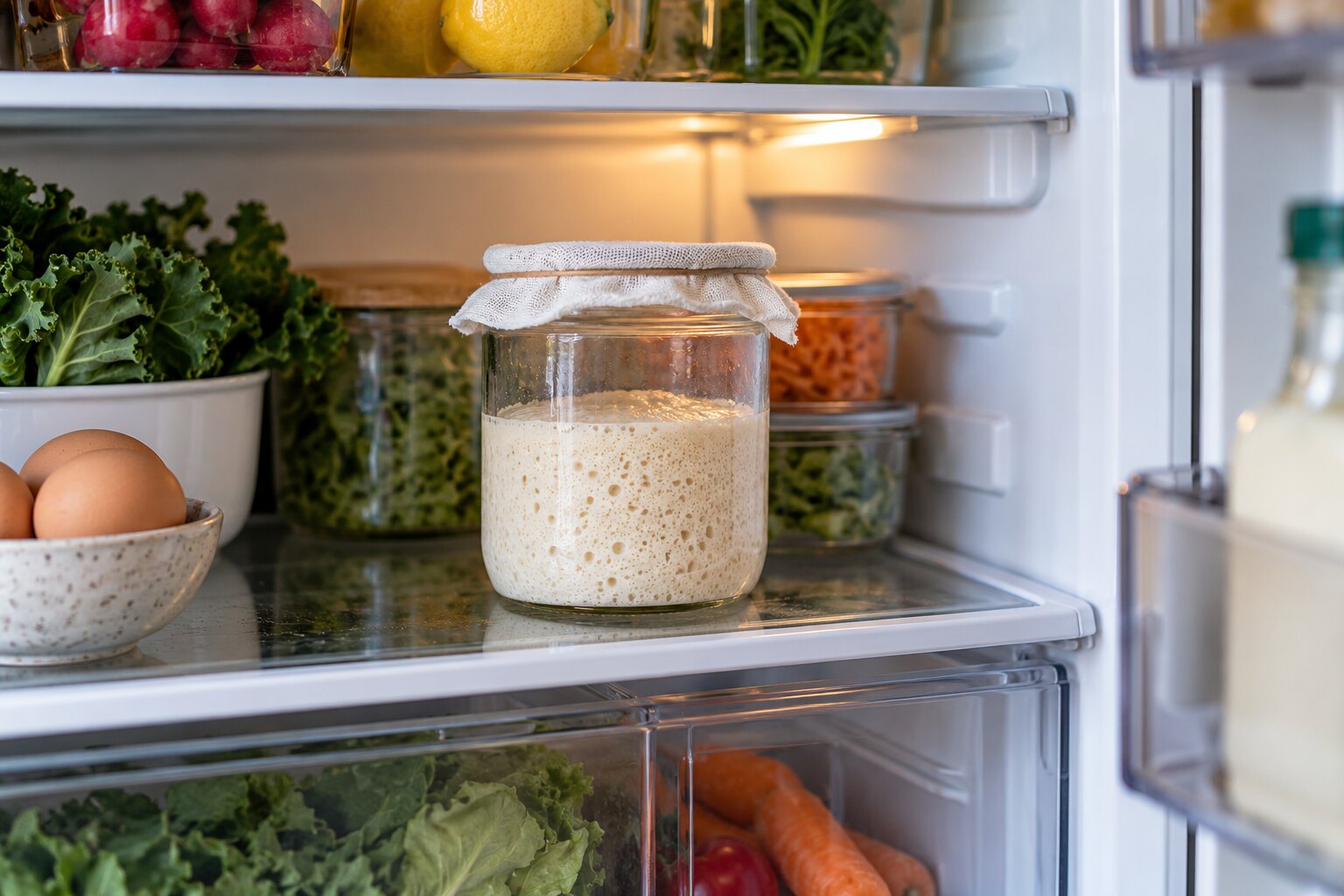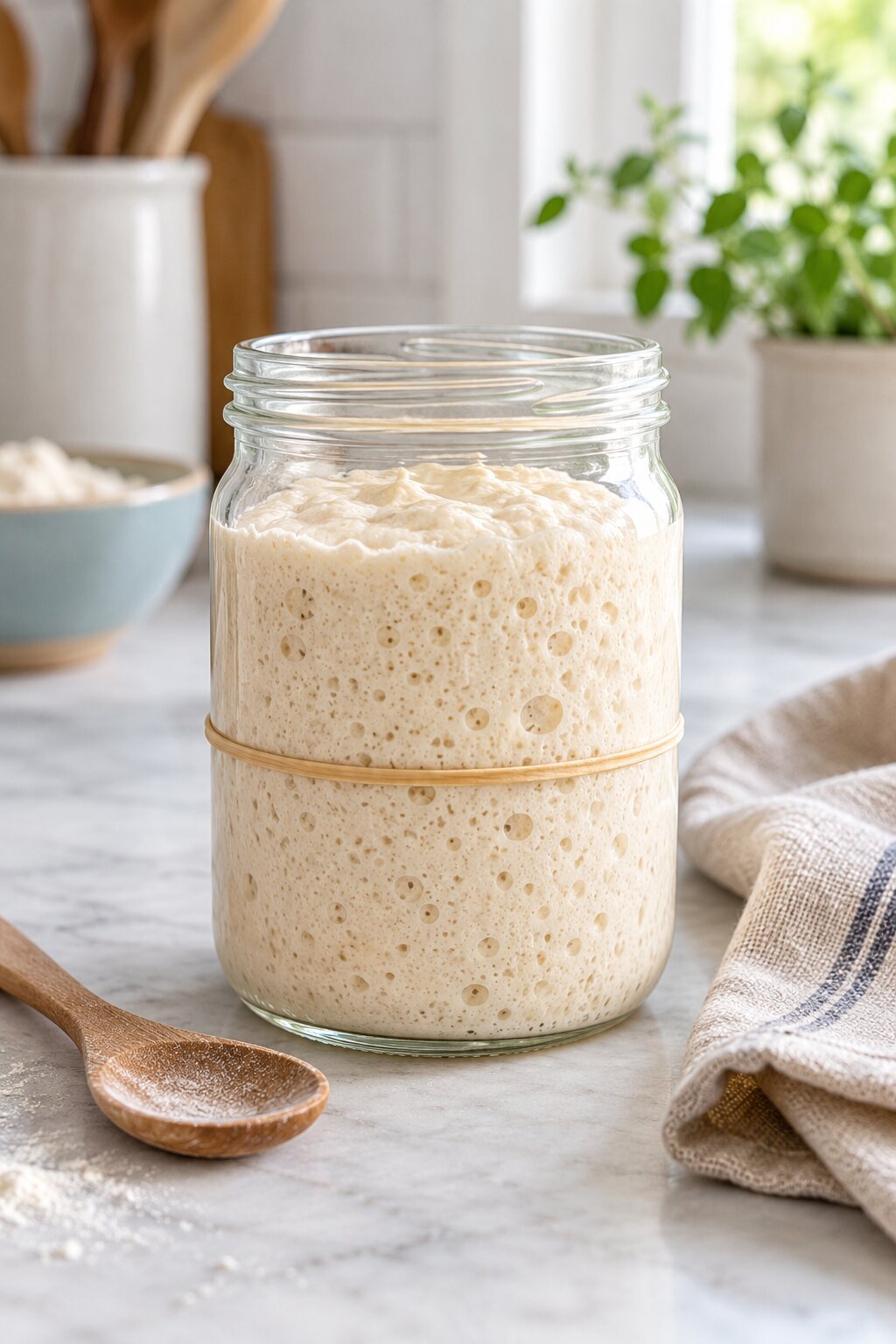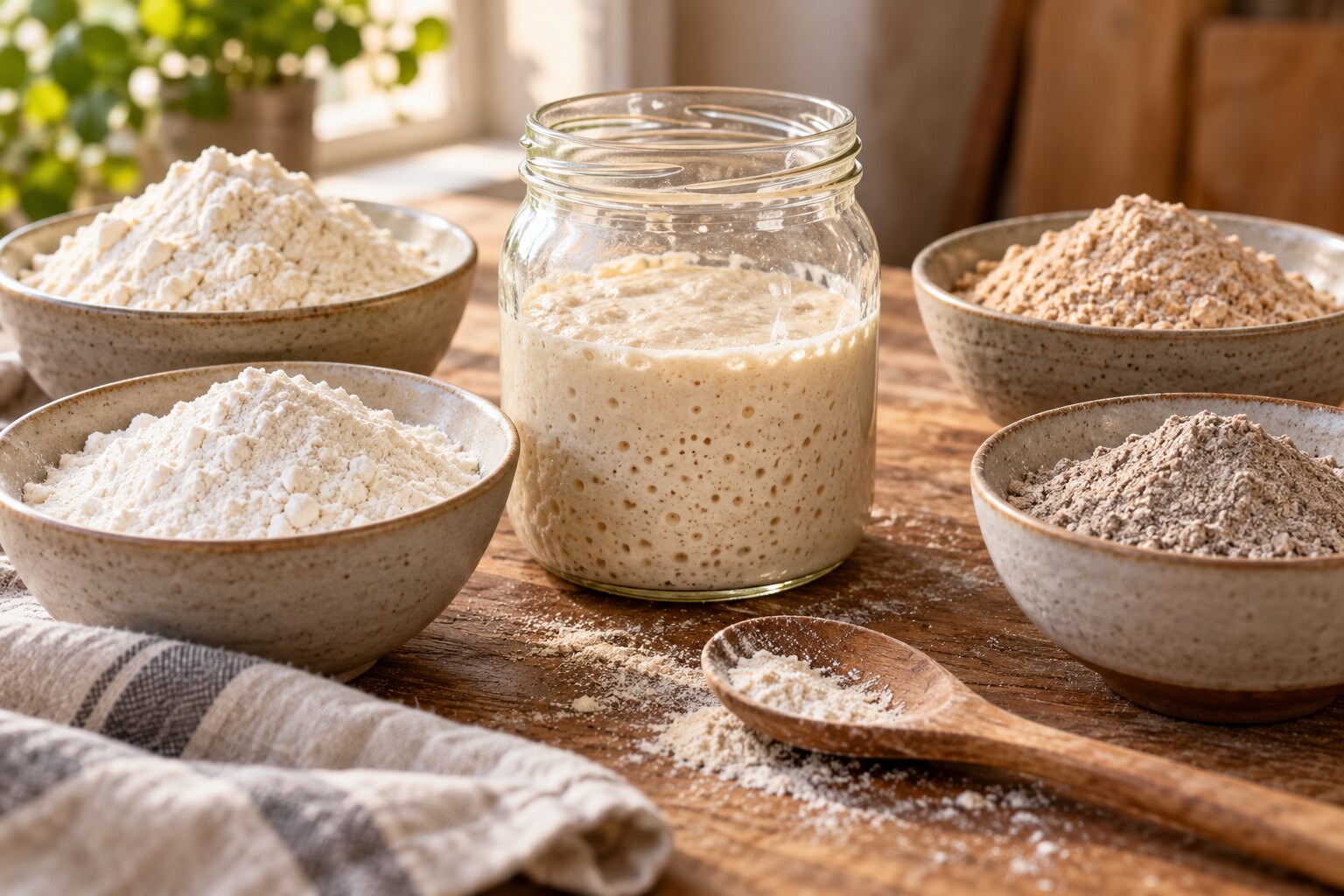
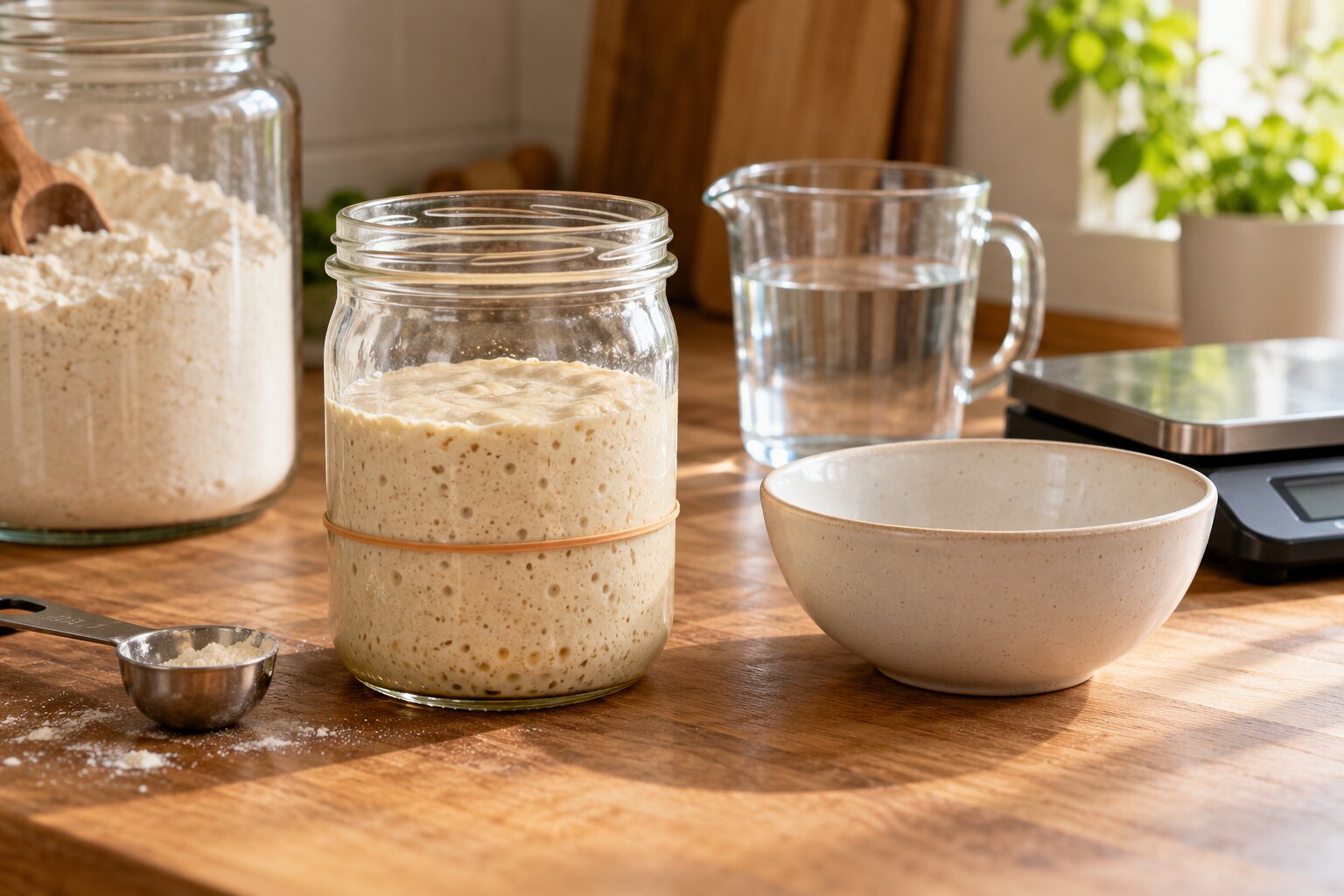
A room-temperature starter often needs feeding once or twice a day, while a mature refrigerated starter may need about a weekly refresh. Before baking, feed it until it rises predictably.
The short answer
Feeding frequency depends on where you keep the starter and how quickly it uses its food. A lively starter on the counter may need one or two feedings a day; a mature starter in the refrigerator is usually refreshed about once a week.
A simple feeding schedule
| Situation | Starting rhythm | What to watch |
|---|---|---|
| Room temperature | Once daily, or every 12 hours when very active | It should rise and peak within the window that fits your routine. |
| Refrigerator | About once a week | Refresh it after feeding and let activity begin before returning it to the fridge. |
| Before baking | One or more room-temperature feeds | Use it when it rises reliably and is near its peak. |
| New starter | Usually once or twice daily after the first days | Expect uneven activity while the culture becomes established. |
| Very active starter | Feed earlier or use a larger ratio | A fast peak and collapse means it may be running out of food. |
If you keep starter at room temperature
A regular counter starter is convenient when you bake often because it stays ready to use. A simple maintenance example is 20 g starter plus 20 g water and 20 g flour by weight. If it peaks and collapses before the next feeding, use a larger feed such as 10 g starter plus 30 g each water and flour.
The exact hour is less important than the pattern. Track how long it takes to rise, whether it smells fresh or sharply acidic, and whether the rise is repeatable.
If you keep starter in the refrigerator
The cold slows fermentation, so a mature starter can be maintained with a much lower frequency. Before chilling it, feed the starter, leave it at room temperature long enough for fermentation to begin, then cover it with room to expand.
When you plan to bake, take it out and give it one or more room-temperature feedings. A cold starter that has been sitting for a while may need a full day of refreshment before it is strong enough to raise dough.
How often to feed before baking
Feed according to the rise, not a fixed promise of six or eight hours. If the starter doubles predictably and still looks aerated, it may be ready. If it rises slowly, give it another refresh and adjust the dough schedule.
The guide When Is Sourdough Starter Ready to Bake With? explains the visual signs in more detail.
Common feeding mistakes
- Adding flour and water to a large jar without removing enough old starter.
- Feeding repeatedly before the starter has had time to ferment.
- Using volume measurements when the starter is very thick or liquid.
- Keeping the jar so full that the rise is difficult to see.
- Assuming a starter needs the same schedule in every temperature.
How to know the schedule works
A healthy routine gives you a starter that rises consistently, smells pleasantly tangy, and becomes active within a predictable window. You do not need to feed it constantly; you need a feeding rhythm that matches your kitchen and your baking plans.