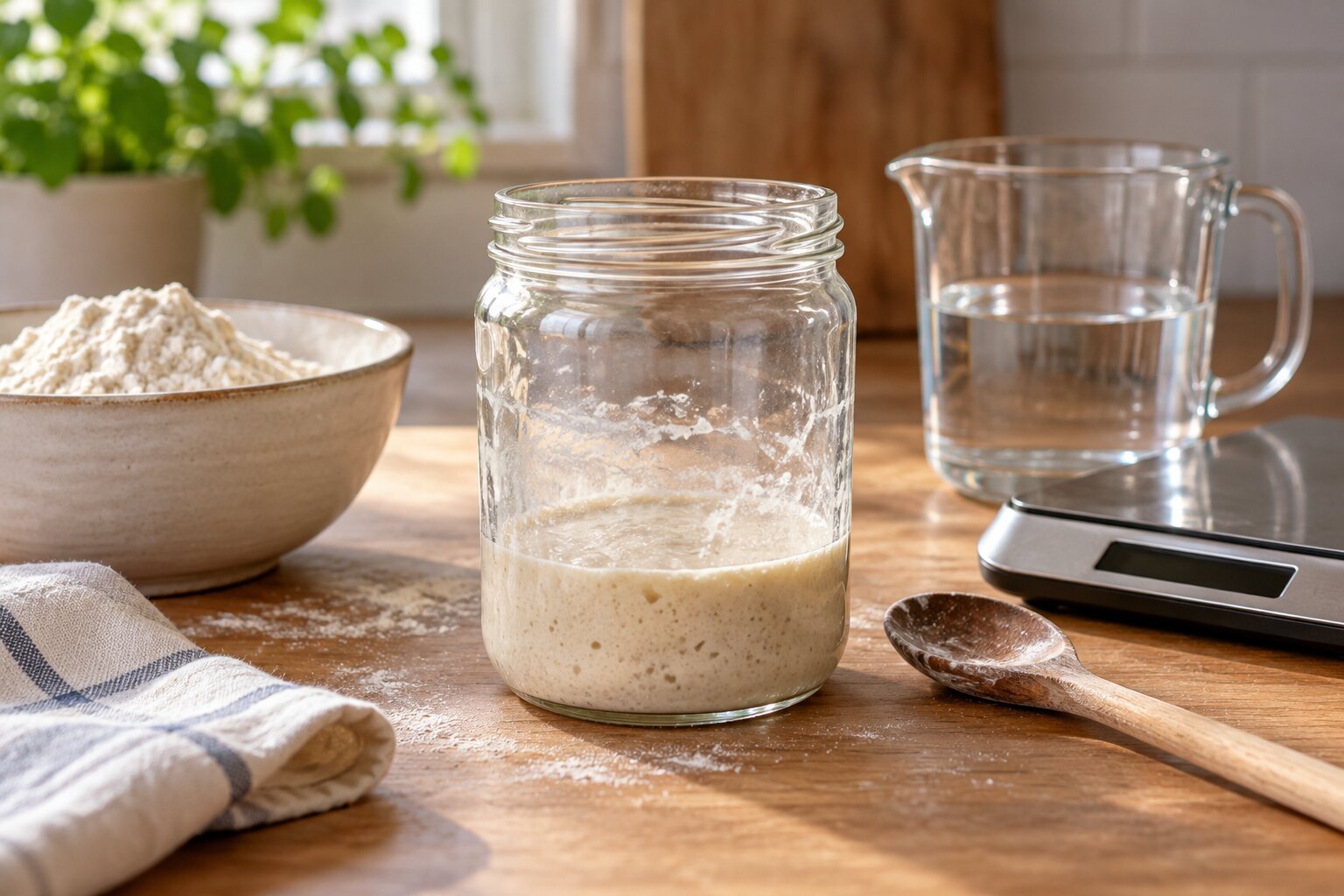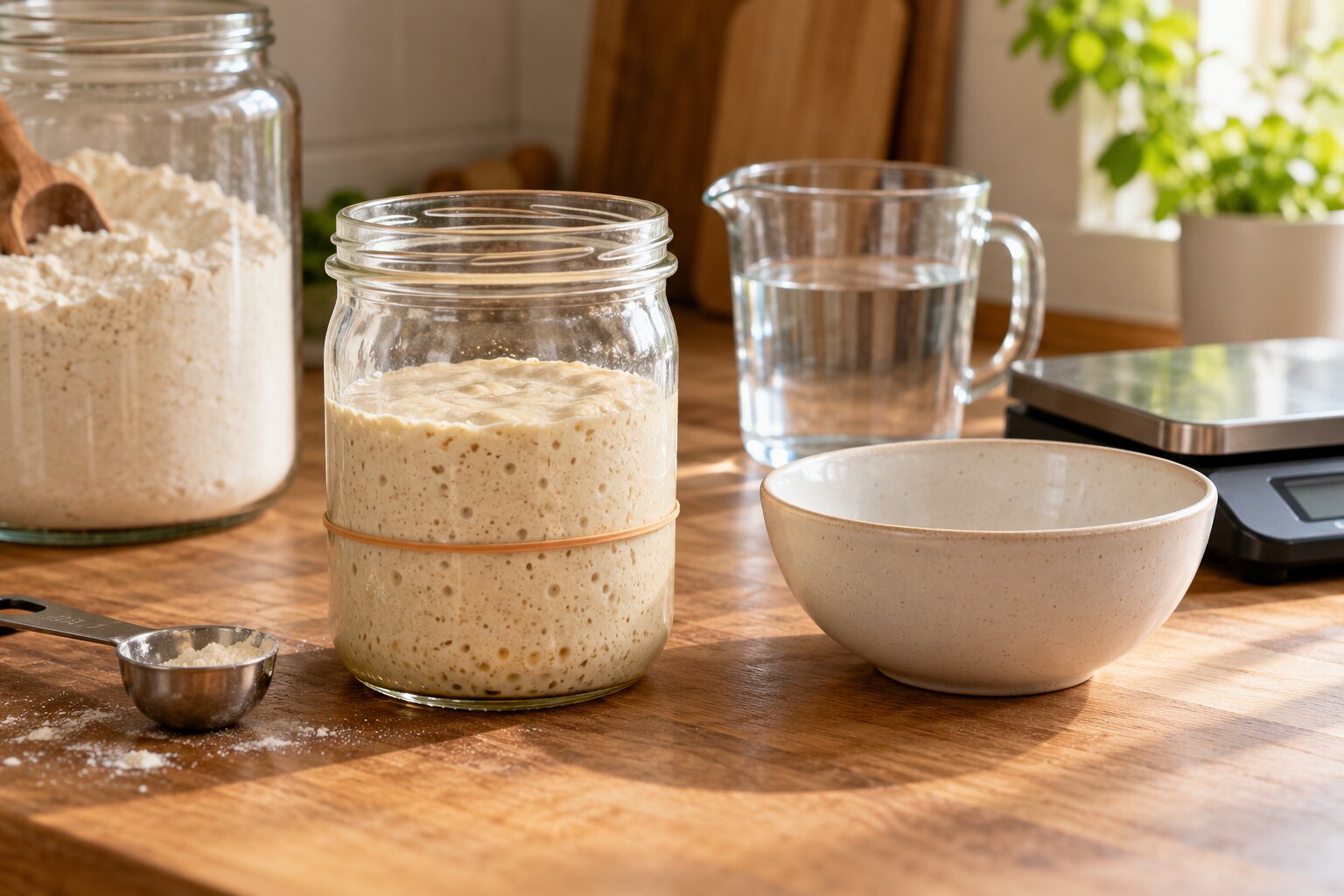
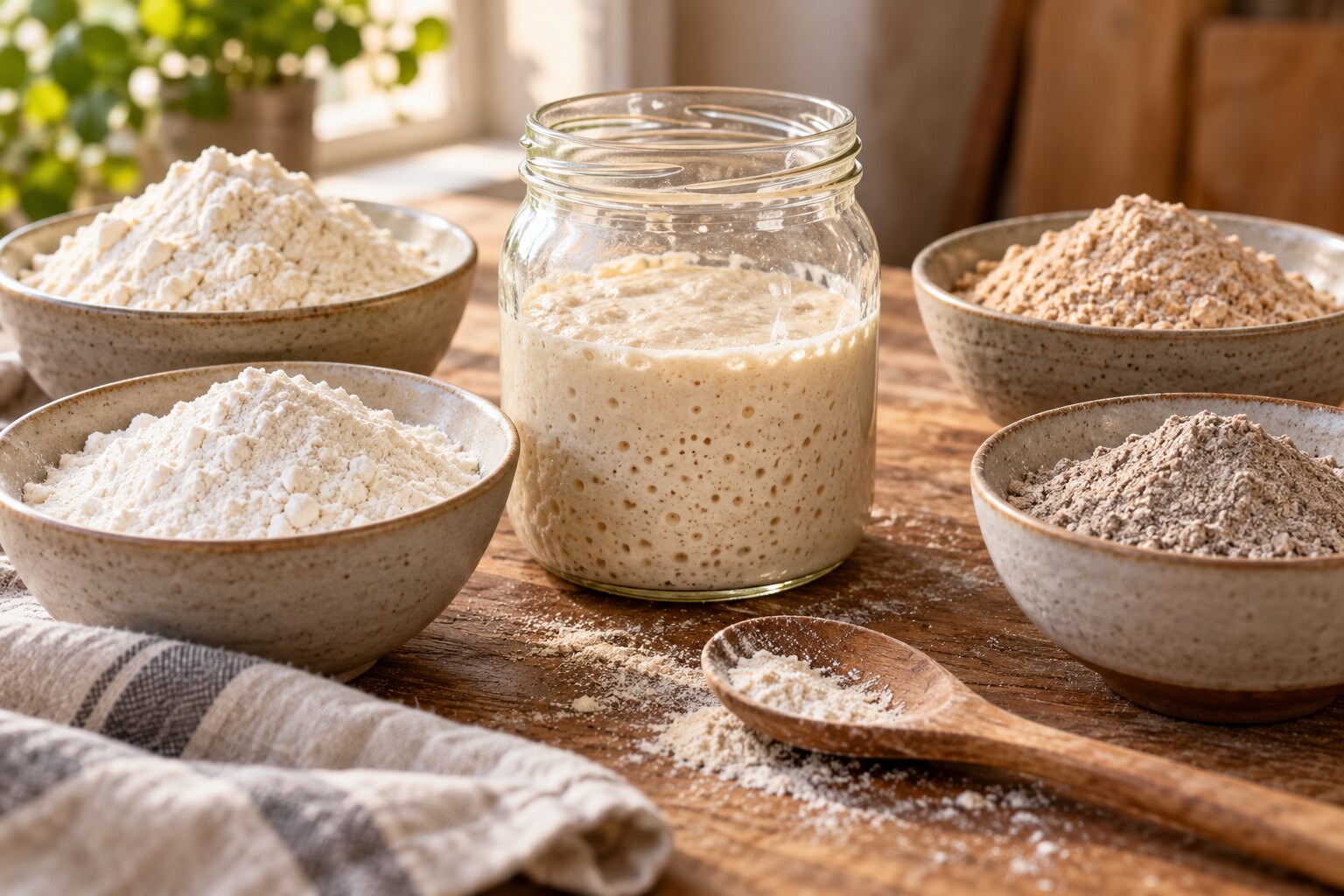
All-purpose flour is a practical beginner choice, bread flour also works, and whole wheat or rye can add minerals and activity—especially for a new or sluggish starter.
The best choice for most beginners
You do not need a special or expensive flour to keep a sourdough starter alive. A consistent all-purpose or bread flour works well for routine feeding. Whole wheat and rye are useful when you are starting a new culture or trying to encourage a sluggish one.
The best flour is the one you can buy regularly, measure consistently, and use with a feeding schedule that fits your kitchen.
Flour comparison
| Flour | Advantages | Watch out for | Good for |
|---|---|---|---|
| All-purpose | Accessible, mild, stable, and easy to maintain. | Some very soft flours may ferment more slowly. | Routine feeding and beginners. |
| Bread flour | Reliable white flour with more protein and a firm texture. | Higher protein is not essential for starter; availability varies. | Bakers who already use it for bread. |
| Whole wheat | More minerals and bran can encourage fermentation and add nutty flavor. | Absorbs water differently and may look thicker or more active. | New or sluggish starters and whole-grain baking. |
| Rye | Often ferments quickly and can give a starter a strong boost. | Can look loose or sticky and may taste more pronounced. | A short boost or rye-focused baking. |
All-purpose flour
All-purpose flour is a dependable maintenance flour for many home bakers. It gives you a neutral starter that can be used in white, whole-wheat, or mixed-flour doughs. Because the starter is only one part of the final formula, you do not need to feed it the same flour as the loaf.
Bread flour
Bread flour can absolutely be used, but its higher protein is more important for the dough than for the starter. A starter does not need to build a strong gluten network in the same way a loaf does. Choose it if it is the flour you already keep and your starter rises reliably with it.
Whole wheat and rye
Whole wheat and rye contain more of the grain’s outer layers, which can provide minerals and food for fermentation. They are especially useful for a new starter or a culture that has become slow. You can keep a starter on a blend or add a small portion to one or two feeds without changing your whole routine.
If you use a darker flour, judge readiness by the starter’s rise and bubbles rather than its color.
A beginner-friendly blend
For routine maintenance, use mostly all-purpose or bread flour. If the starter is slow, replace 10–20% of the flour with whole wheat or rye for a few feeds. Once the starter is strong, return to the flour that fits your normal baking schedule.
When flour is not the problem
Changing flour will not fix a starter that is kept too cold, fed too often, or contaminated. First check the feeding ratio, temperature, and rise pattern. The troubleshooting guide Why Is My Sourdough Starter Not Rising? will help you work through those causes.
For a weak culture, combine a suitable flour with the consistent reset in How to Revive a Weak Sourdough Starter.