Keep a small amount of starter, feed it consistently by weight, keep it comfortably warm, and wait for repeatable rises. Do not promise a fixed recovery time because each starter behaves differently.
First, check whether it is safe to revive
A grey or brown liquid on top can be hooch and often means the starter is hungry. Fuzzy mold, pink or orange streaks, or a rotten smell are different: discard the culture and clean the container before starting again.
A gentle reset method
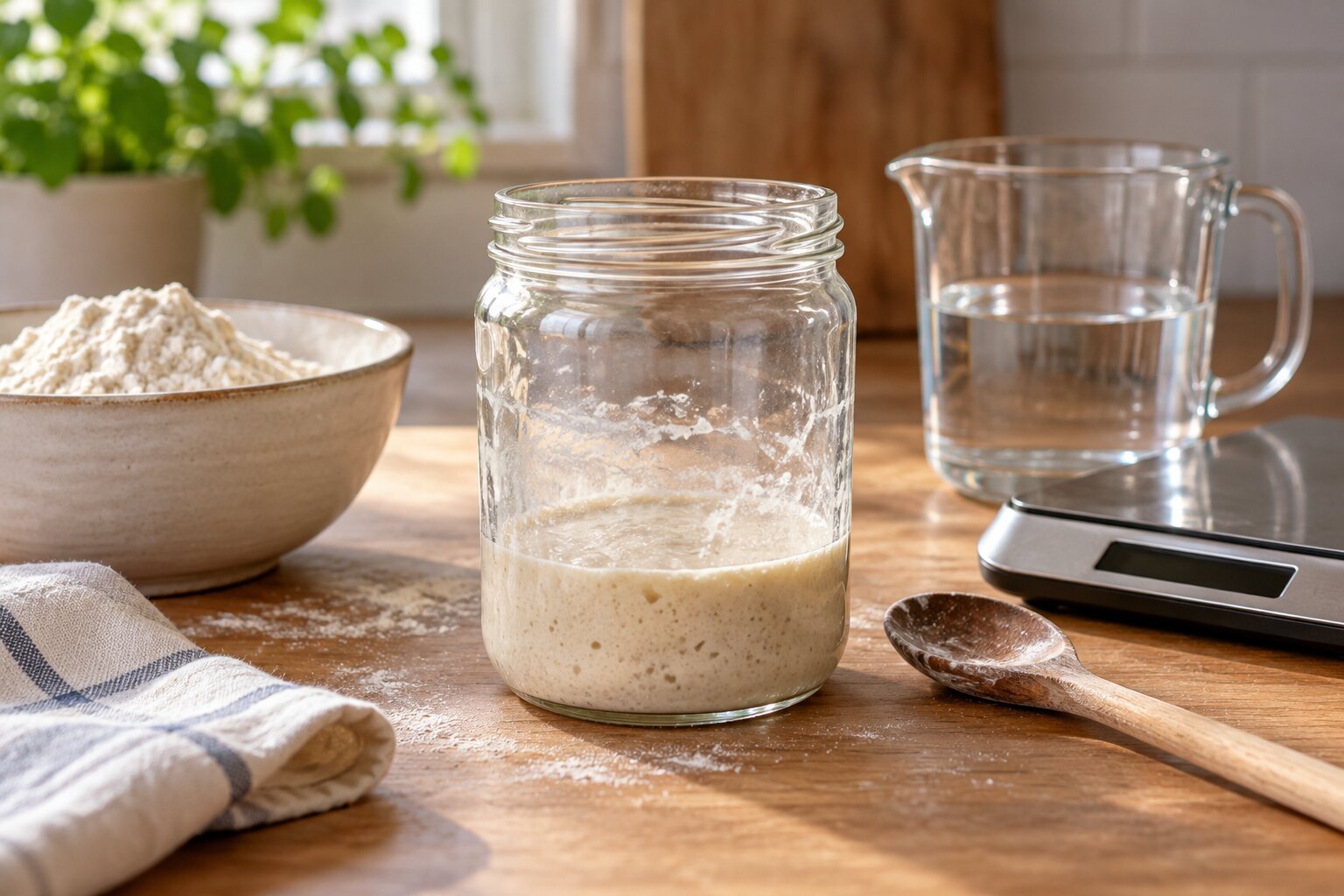
- 01Keep 20 g of the starter in a clean, straight-sided jar.
- 02Add 20 g water and 20 g flour by weight for a small 1:1:1 refresh.
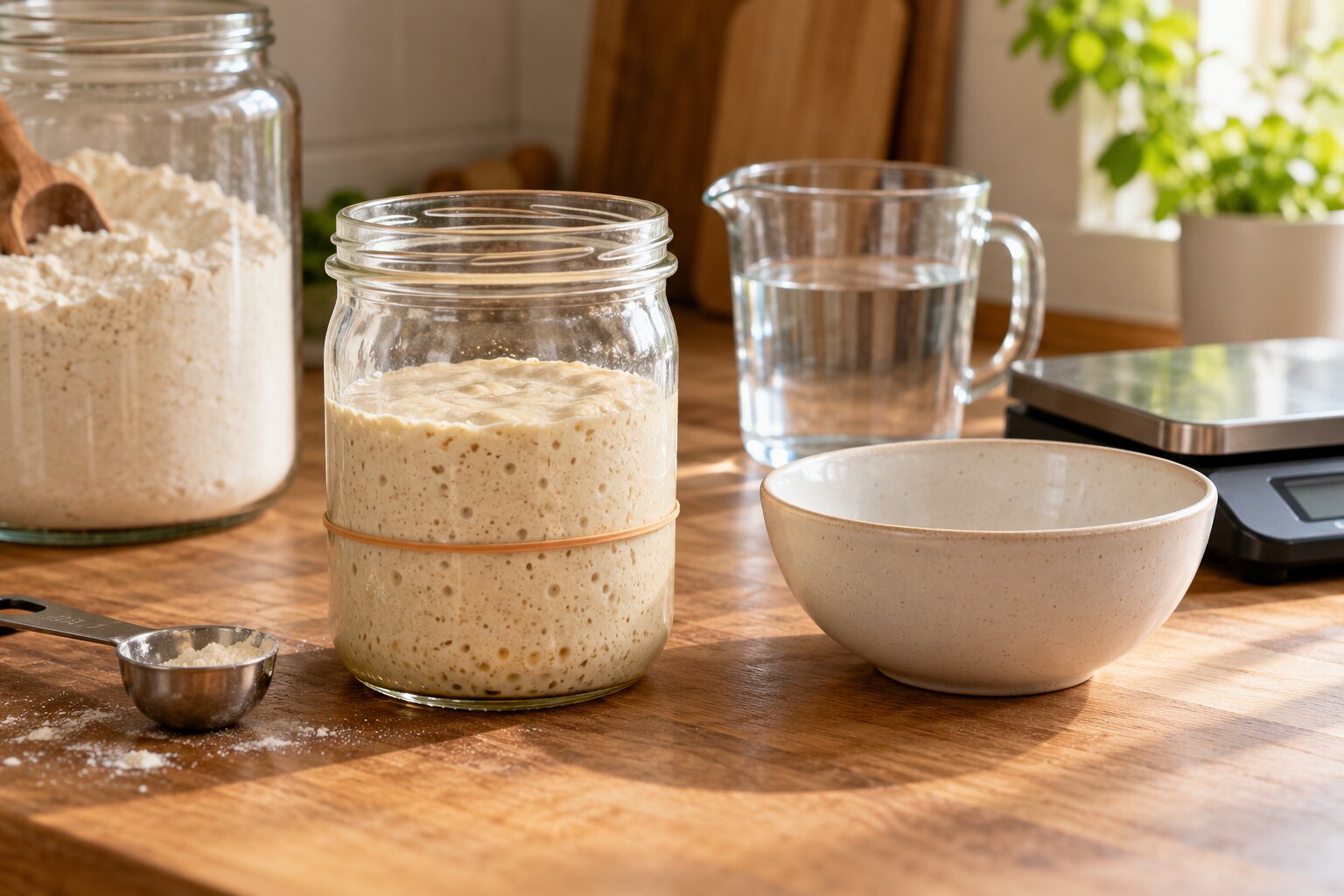
- 03Mix until no dry flour remains, mark the starting level, and place it somewhere comfortably warm.
- 04Wait until you see bubbles and a noticeable rise before feeding again.
- 05If it rises and collapses quickly, switch to 10 g starter plus 30 g each water and flour for a 1:3:3 feeding.
- 06Repeat the same ratio for several feeds and judge progress by the rise, aroma, and texture.
Temperature matters more than most rescue tricks
A weak starter may simply be cold. Aim for a comfortably warm room-temperature spot rather than direct heat. Around 24–27°C can encourage activity, but a hot oven, radiator, or very warm appliance can damage the culture or make it acidify too quickly.
If your kitchen is cool, expect a slower rise. Feeding again before the starter has fermented can dilute the small yeast population you are trying to strengthen.
Choose a helpful flour
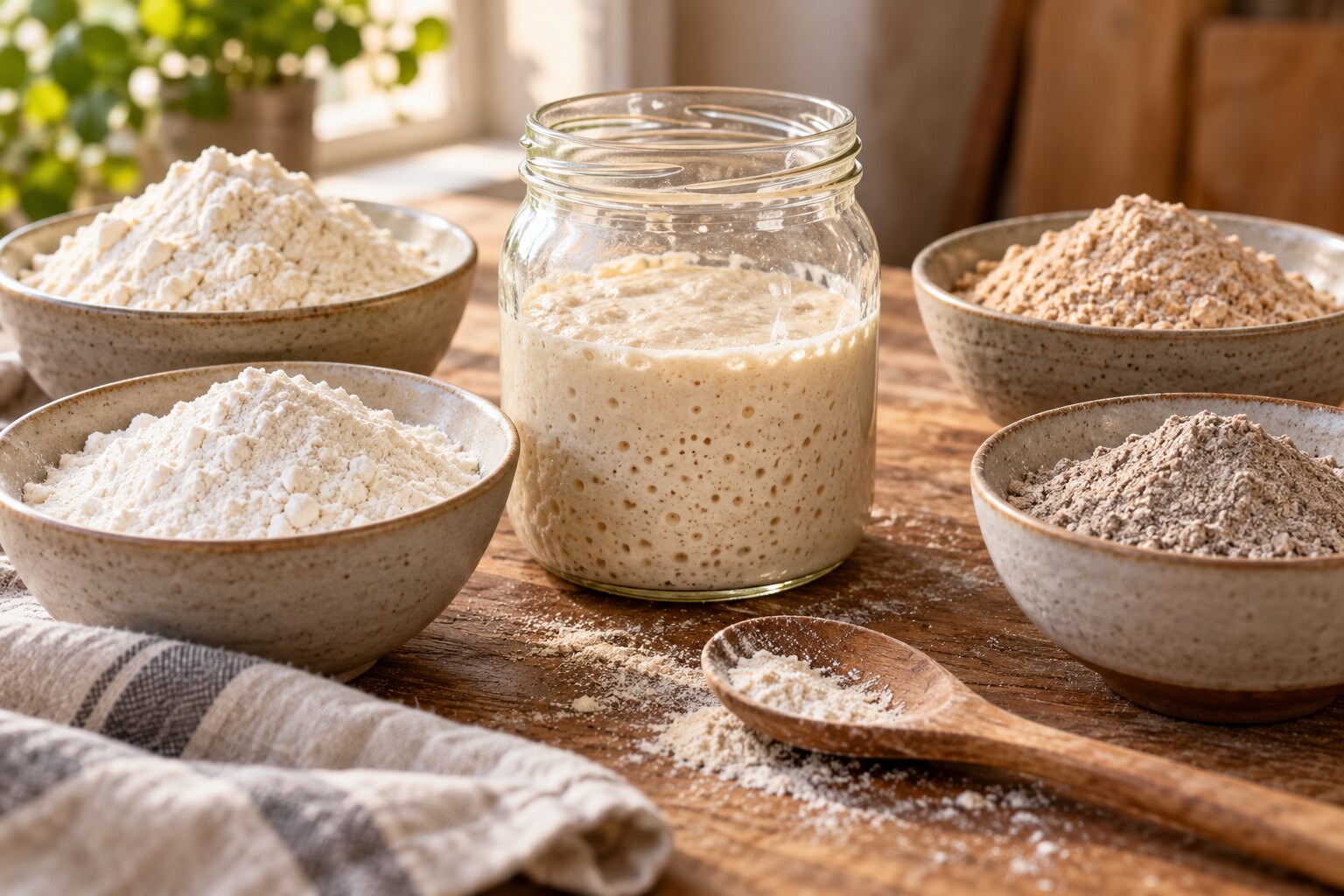
All-purpose or bread flour can maintain a healthy starter, but a little whole-wheat or rye flour can provide extra minerals and often speeds up a sluggish culture. Try replacing about 10–20% of the white flour for a few feeds instead of changing everything at once.
For a fuller comparison, read Best Flour for Sourdough Starter.
What progress looks like
| Stage | What you may notice |
|---|---|
| Early activity | A few bubbles, a fresher smell, or a small rise after feeding. |
| Building strength | More bubbles through the jar and a rise that happens in a repeatable window. |
| Ready to bake | The starter doubles or follows its normal peak pattern and remains aerated near the top. |
| Still weak | No meaningful rise after consistent warm feeds, or an unpleasant smell or unusual color. |
When to change the ratio
If the starter peaks very quickly and collapses, give it more fresh flour and water. If it has barely moved, keep the feeding smaller and allow more time. The best ratio is the one that gives your starter enough food to rise within your schedule.
Before you bake with it
Do not use the first bubbly feed automatically. Wait until the starter rises predictably for at least a few cycles and smells pleasantly tangy. Then use How Often Should You Feed a Sourdough Starter? to choose a maintenance rhythm that suits your kitchen.