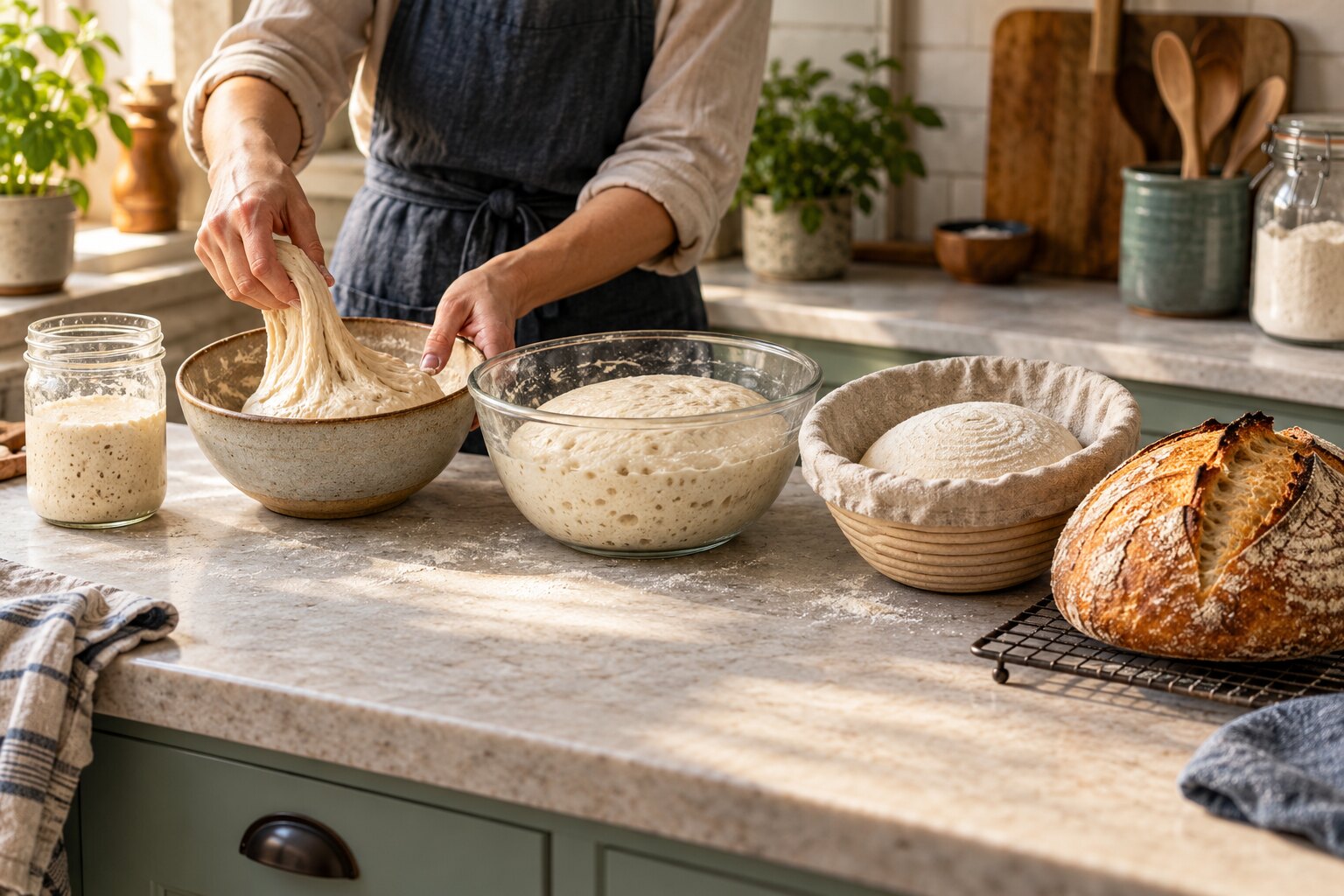
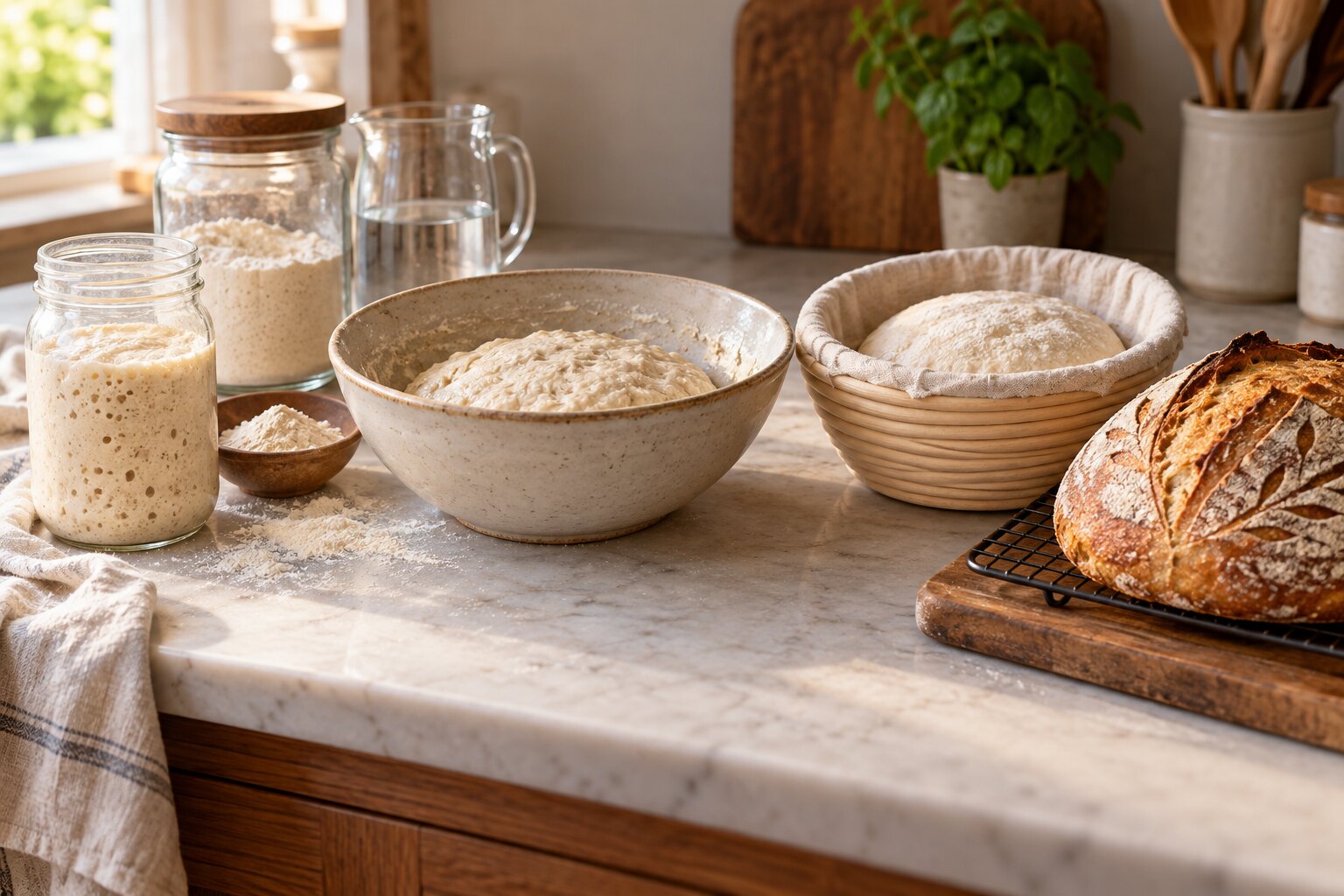
Sourdough is made by combining flour, water, an active natural starter, and salt, then allowing the dough to ferment before shaping, proofing, and baking. The starter supplies the fermentation; time and temperature shape the result.
The basic idea behind sourdough
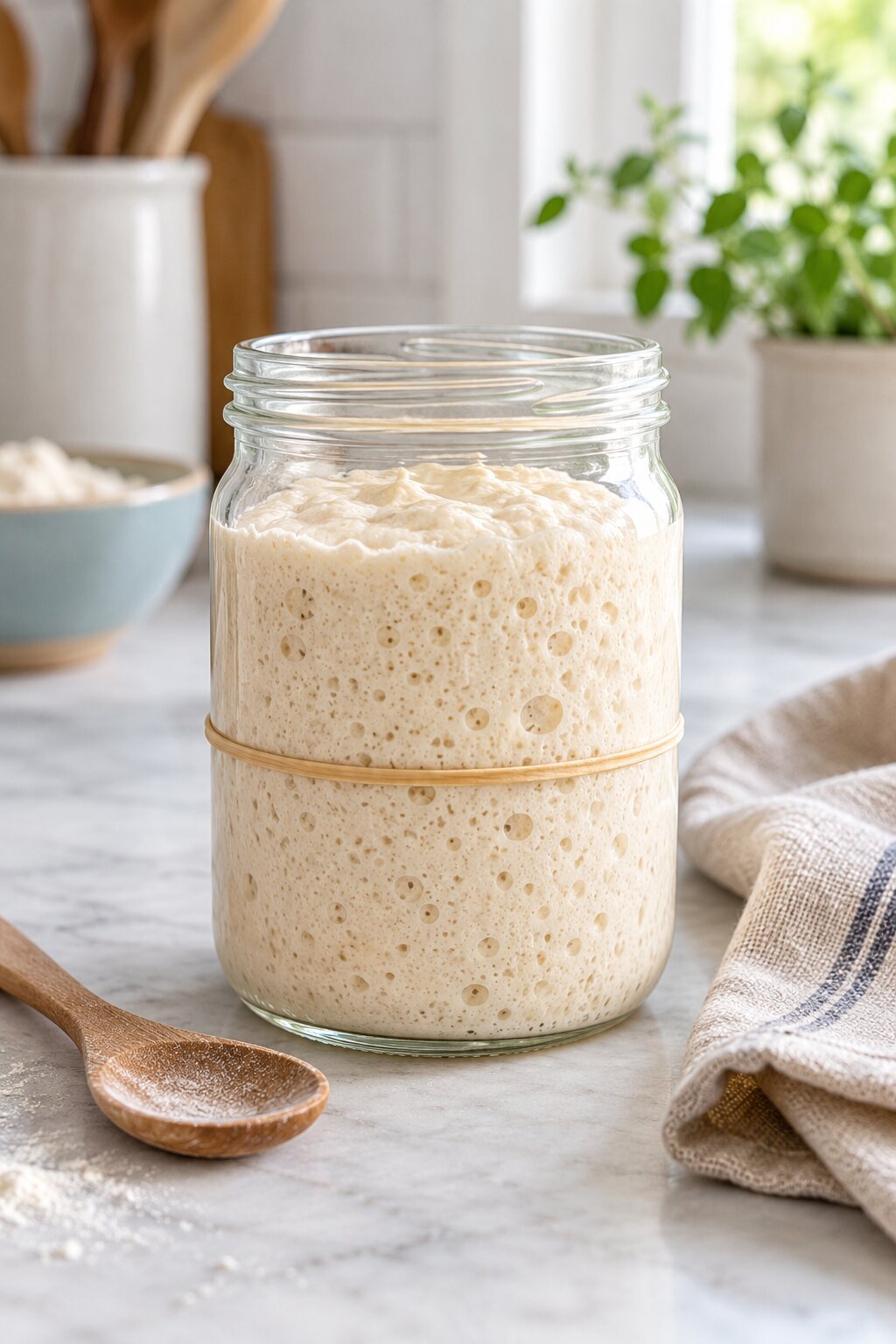
Sourdough is bread made with a living culture of flour and water instead of relying only on commercial yeast. The starter contains naturally occurring yeasts and lactic-acid bacteria. When the starter is active, it helps the dough ferment, expand, and develop its characteristic flavor.
The process from starter to loaf
- 01Feed the starter and wait until it rises predictably near peak activity.
- 02Mix flour and water, then rest the dough so the flour can hydrate.
- 03Add the active starter and salt, then mix until the dough is cohesive.
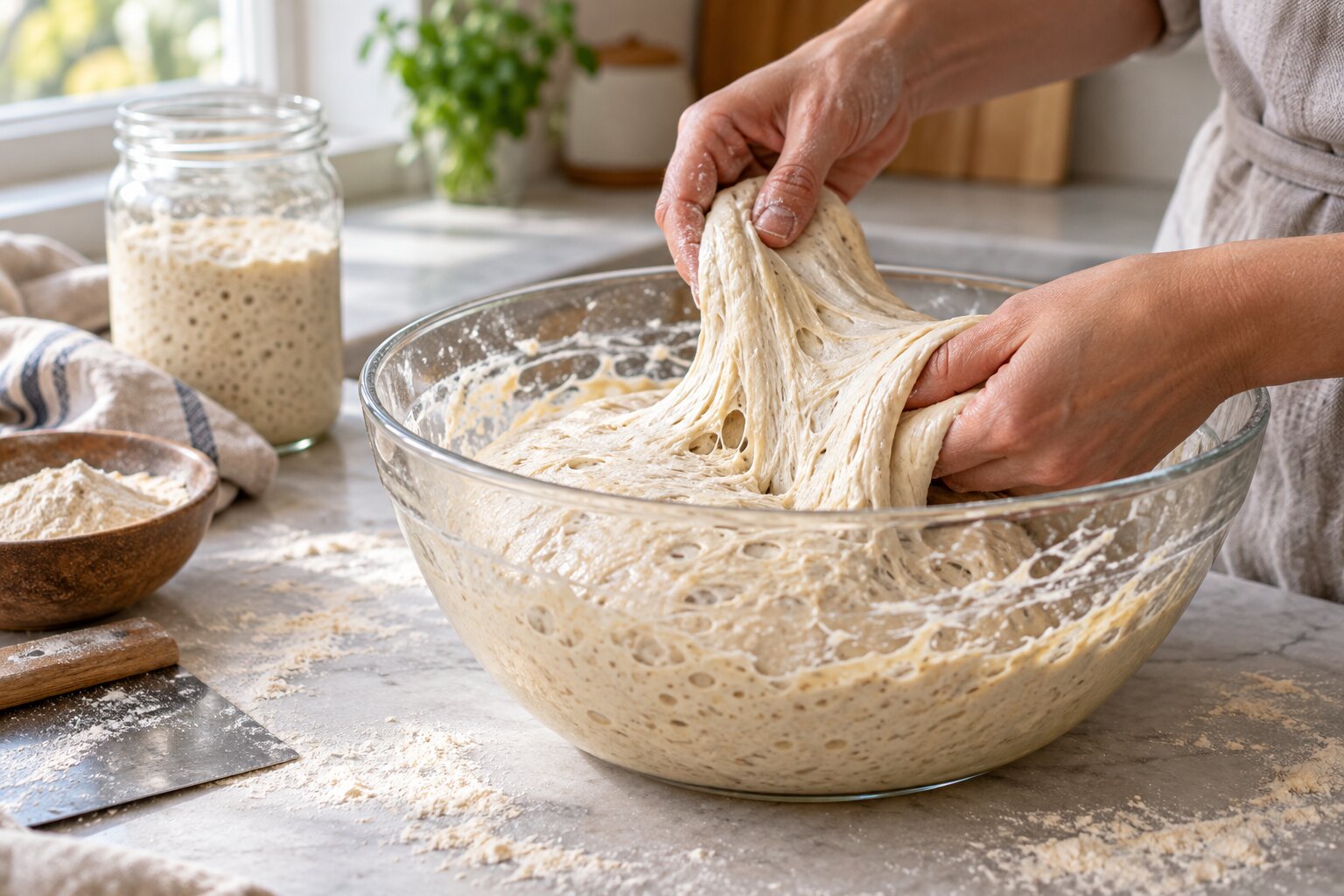
- 04Build strength with gentle stretch-and-folds during the first part of bulk fermentation.
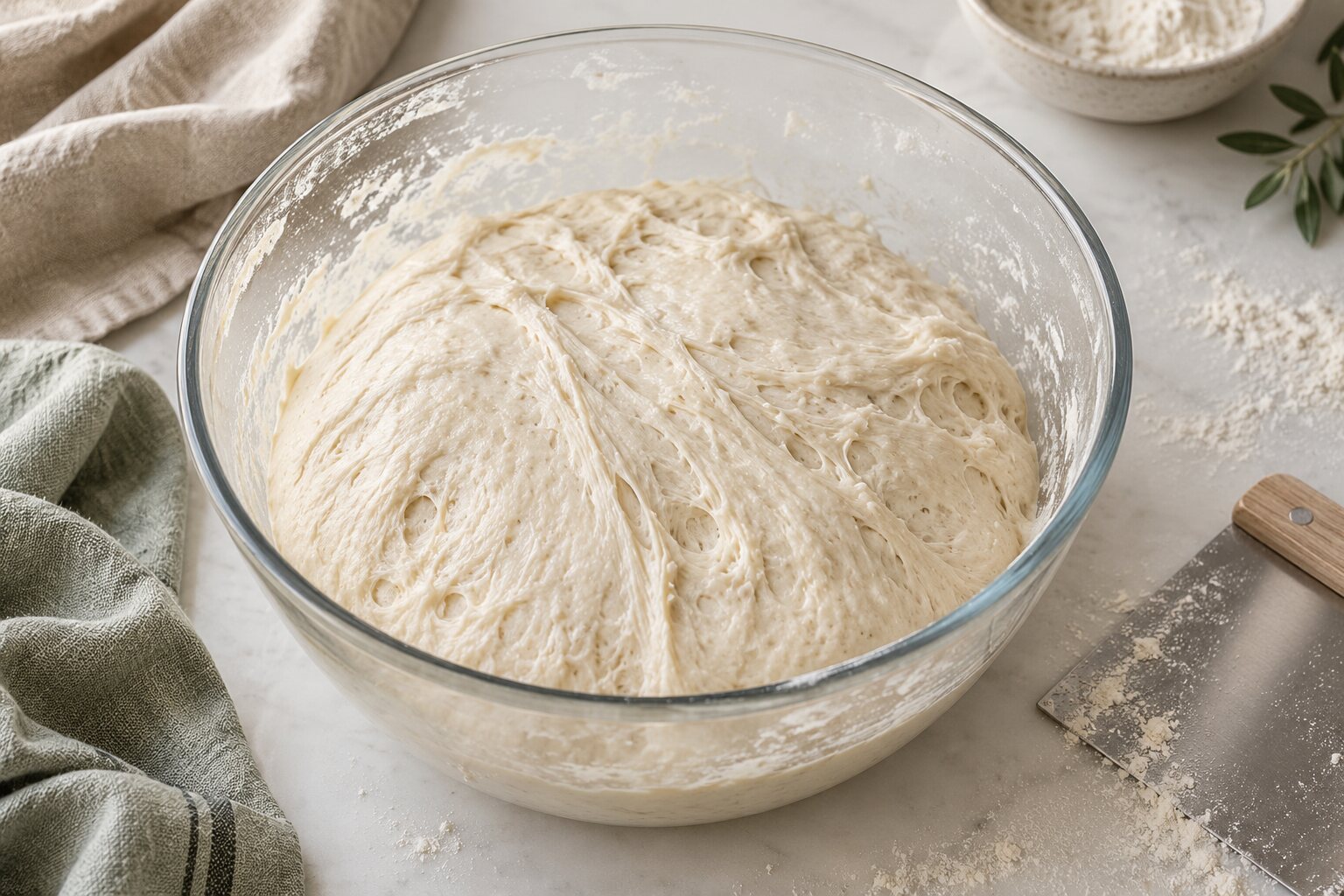
- 05Let the dough ferment until it looks aerated, lighter, and expanded.
- 06Shape the dough with enough tension to hold its form without pressing out all the gas.
- 07Proof the shaped dough, then score and bake it in a thoroughly heated oven.
The four main ingredients
| Ingredient | What it contributes |
|---|---|
| Flour | Structure, starch, flavor, and the food needed by the starter and dough. |
| Water | Hydrates the flour and determines how soft, extensible, or sticky the dough feels. |
| Active starter | Brings natural fermentation, acidity, flavor, and leavening power. |
| Salt | Adds flavor and helps regulate fermentation and dough strength. |
Why sourdough timing is flexible
A recipe may give a time window, but fermentation changes with the temperature of the room, the dough, the flour, and the strength of the starter. A warm kitchen can move the dough quickly; a cool kitchen may need much longer. Use time as a guide, then confirm with the dough’s volume, bubbles, texture, and feel.
What bulk fermentation does
Bulk fermentation is the first major rise after the dough is mixed. During this stage, the starter produces gas and acids while the dough develops flavor and structure. The dough does not always need to double. Look for a smoother surface, bubbles at the edges, a lighter feel, and a noticeable but not extreme increase in volume.
Shaping and proofing
Shaping organizes the dough and creates surface tension. Final proofing gives the shaped loaf time to relax and expand before baking. If the dough feels tight and springs back immediately, it may need more time. If it feels fragile and collapses when handled, it may have gone too far.
Baking the loaf
A hot oven gives the dough its final burst of expansion, called oven spring. Steam or a covered baking vessel helps the crust stay flexible at the beginning. The loaf is ready when the crust is deeply browned and the centre has finished setting. Let it cool before cutting so the crumb can firm.
For a clear first formula, use The Original Sourdough Bread Recipe after your starter is rising reliably. If you want a full clock-based example, follow The Beginner Sourdough Timeline.
The main beginner mistake
The most common mistake is following the clock while ignoring the dough. Keep notes, but let the signs in front of you decide whether to continue fermenting, shape, or bake. One variable at a time is easier to learn than changing flour, water, temperature, and timing all together.
The simple summary
Sourdough is made by feeding a starter, mixing a dough, fermenting it, strengthening and shaping it, proofing it, and baking it. Once you understand what each stage is doing, the process feels much less mysterious.