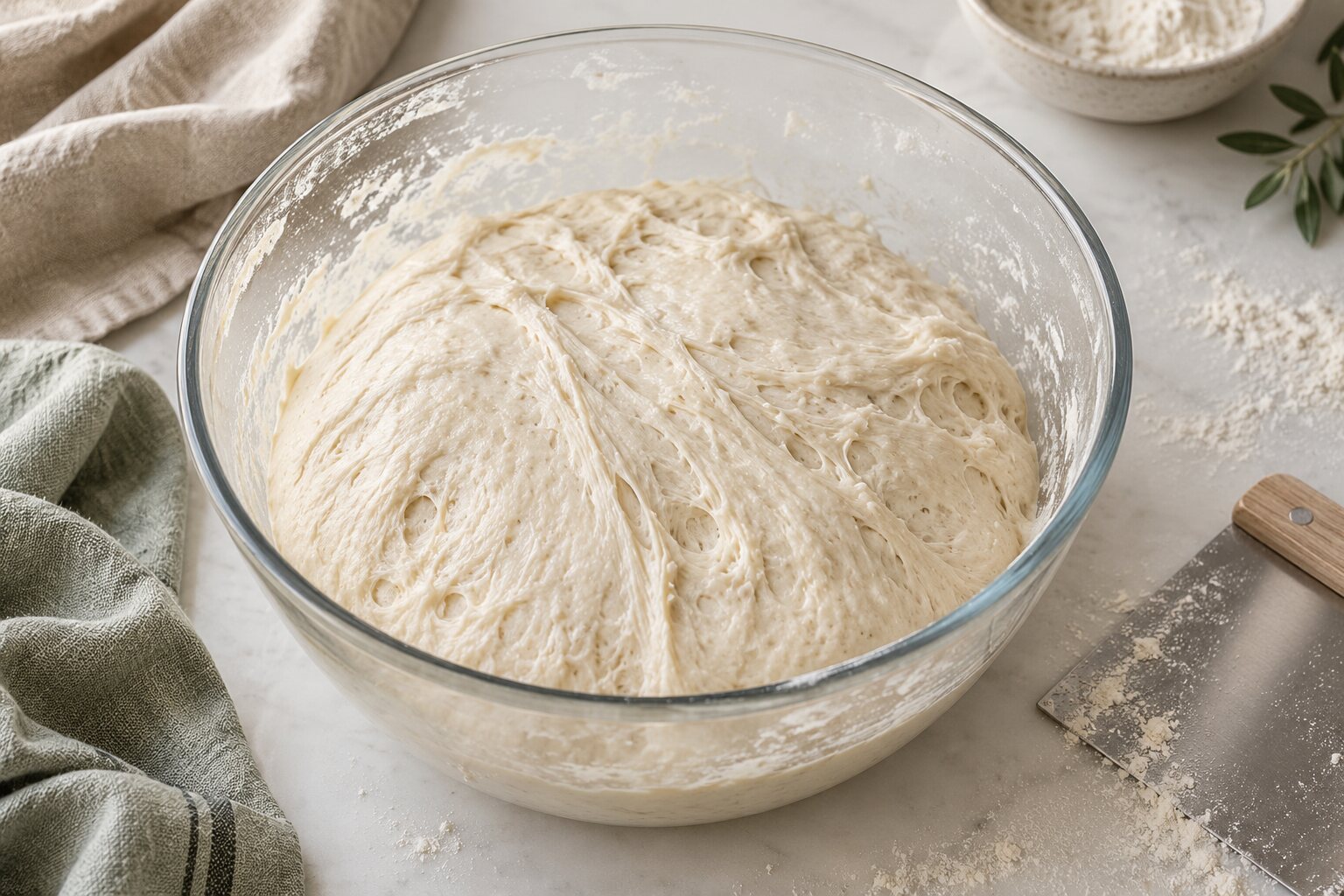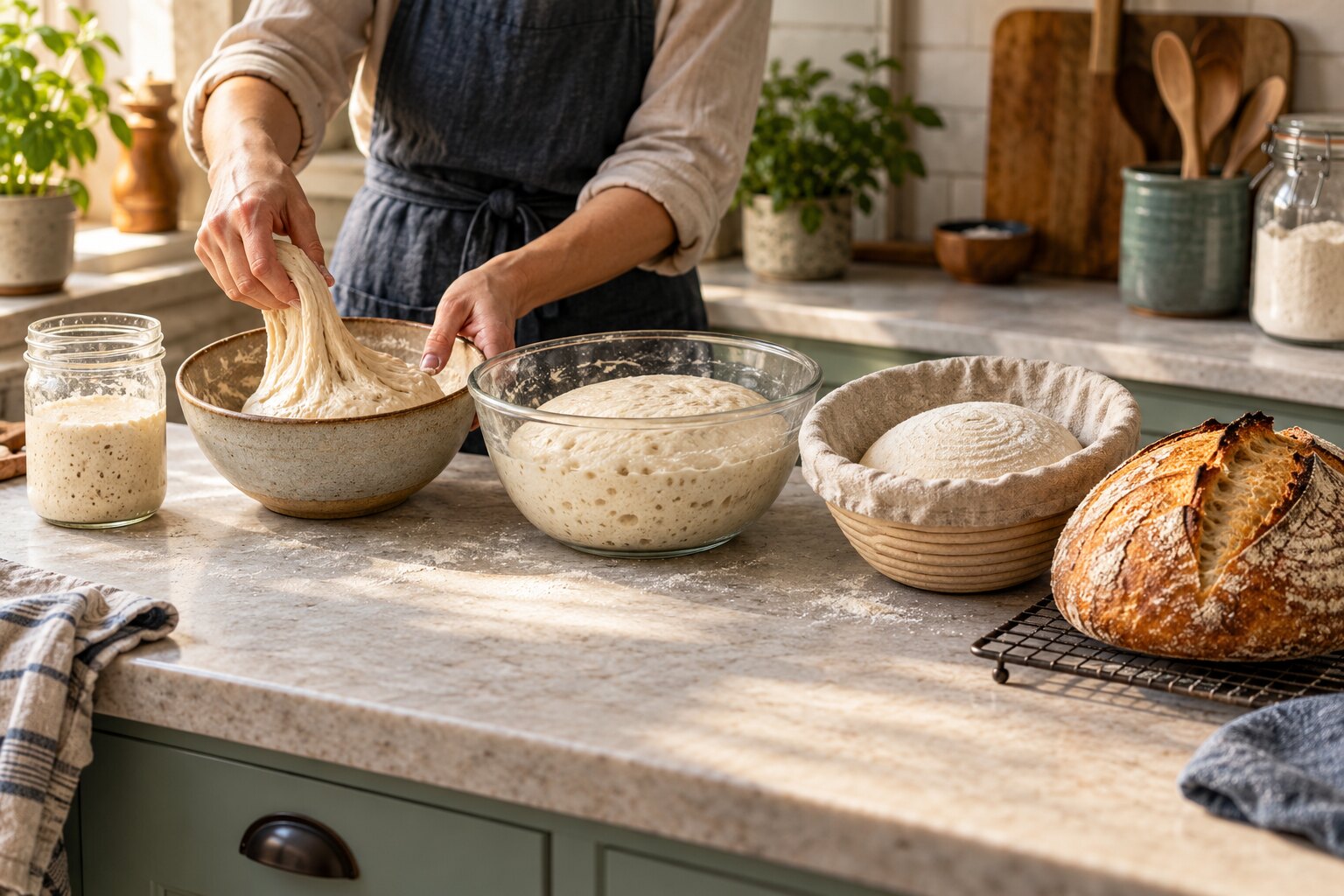
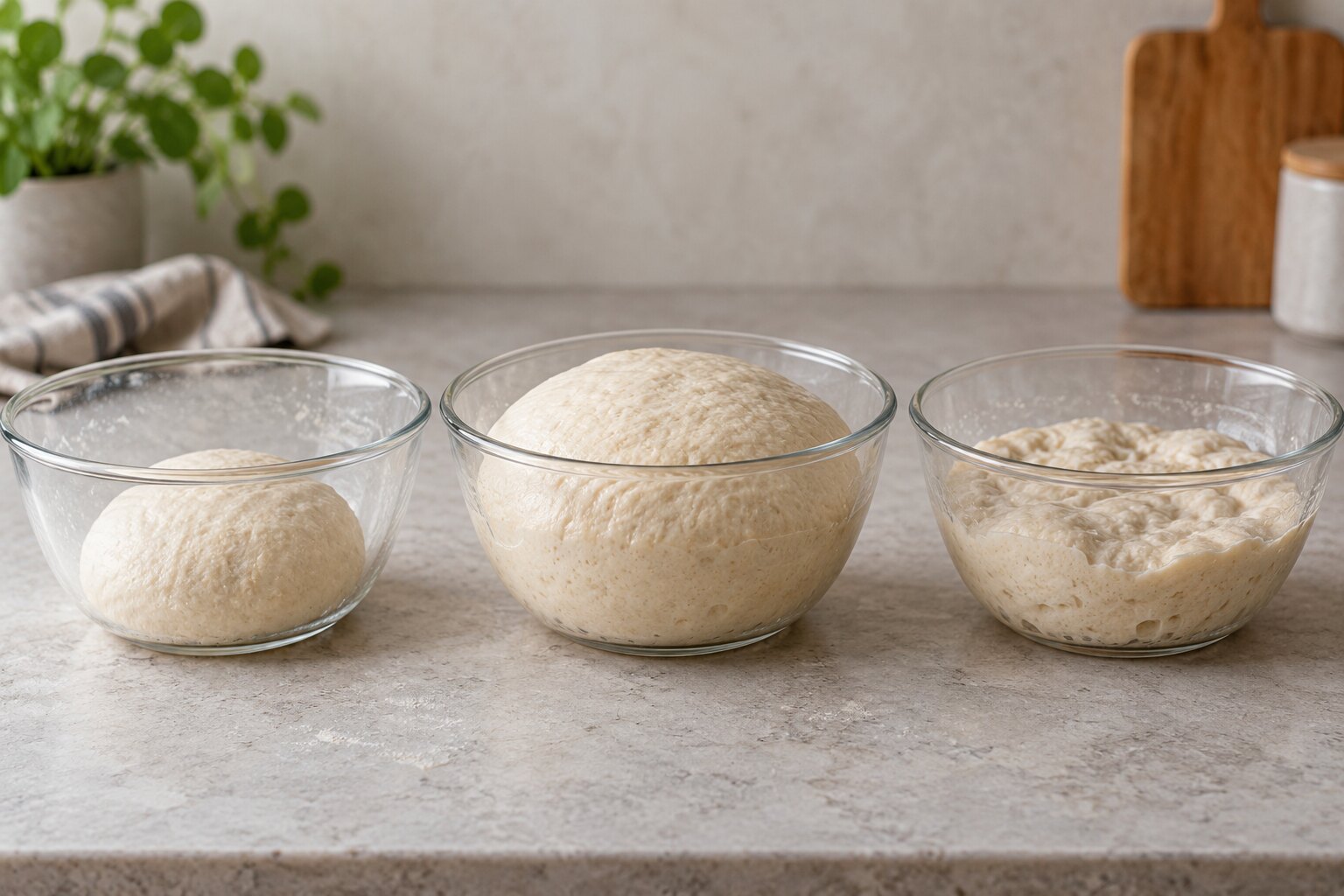
Underproofed dough is still tight and springs back quickly; overproofed dough is weak, fragile, and barely springs in the oven. Use several clues together rather than one test alone.
Why the difference matters
Both underproofed and overproofed loaves can look disappointing, but they need opposite changes. Underproofed dough needs more fermentation; overproofed dough needs less total fermentation or a cooler schedule.
No single sign is perfect, especially with high-hydration dough or unusual flour. Read the dough, the oven spring, and the crumb together.
Underproofed vs. overproofed sourdough
| Sign | Underproofed | Overproofed |
|---|---|---|
| Dough strength | Tight, elastic, and resistant when shaped. | Soft, fragile, slack, or difficult to hold. |
| Rise before baking | Not enough visible expansion or still dense in the basket. | Very puffy, then weak or beginning to collapse. |
| Poke response | Indent springs back quickly. | Indent stays or returns only slightly. |
| Oven spring | Sudden or uneven burst, sometimes with tearing. | Little lift; loaf spreads sideways or stays low. |
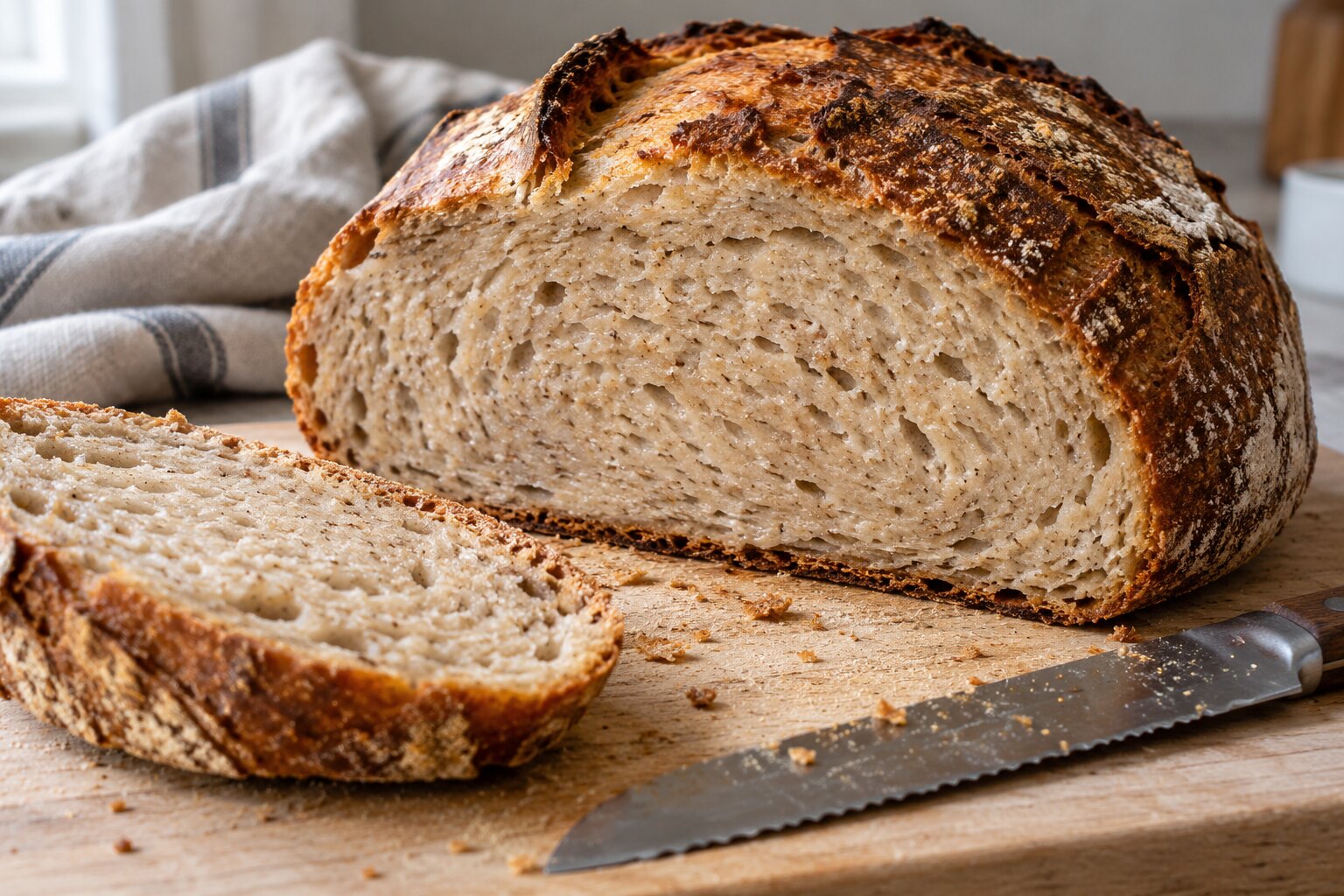
| Crumb | Tight areas with scattered large tunnels or a dense lower band. | Small, more even holes with possible large gaps near the crust. |
| Flavor | Often mild because fermentation was cut short. | May taste more acidic or fermented. |
| Next change | Give bulk fermentation or final proof more time. | Shorten fermentation, cool the dough, or bake sooner. |
How to use the poke test
Use the poke test during final proofing, not as the only test during bulk fermentation. Lightly flour a finger and press the dough gently. Dough that springs back immediately is usually not ready; dough that slowly fills the dent but keeps a slight impression is closer to the baking window; dough that stays deeply indented may be overproofed.
Hydration, flour strength, and shaping can change the feel, so confirm the result with the dough’s rise and structure.
If the loaf is underproofed
The next loaf usually needs more time in bulk fermentation, final proof, or both. If you catch the dough before baking and it is clearly tight, let it continue fermenting and check it again instead of forcing it into the oven.
Also check whether the starter was used near peak activity. A weak or under-ripe starter can make the entire timeline look “late.”
If the loaf is overproofed
Bake it as soon as you recognize the problem. Handle it gently because reshaping can remove the remaining structure. The loaf may be flatter, but it can still be useful for toast, croutons, or breadcrumbs.
For the next bake, shorten the warm bulk, reduce the final proof, use a cooler spot, or refrigerate the shaped dough earlier. Adjust one part of the schedule rather than changing the whole recipe.
Keep better notes
- Starter feeding ratio and time
- Dough temperature after mixing
- Room temperature during bulk fermentation
- Percentage rise before shaping
- Proofing time and refrigerator temperature
- What the dough felt like immediately before baking
For a stage-by-stage schedule, read The Beginner Sourdough Timeline. For other causes of a heavy crumb, continue with Why Is My Sourdough Dense and Gummy?.